
If Your Roof
Is a cold flat roof over a brick factory
One sprayed layer adds insulation and covers old patches with a continuous surface.
Start WithFoam and topcoat
As a Philadelphia spray foam roofing contractor, we spray polyurethane foam over dry, fastened roofs and seal it with a protective topcoat in the same project.
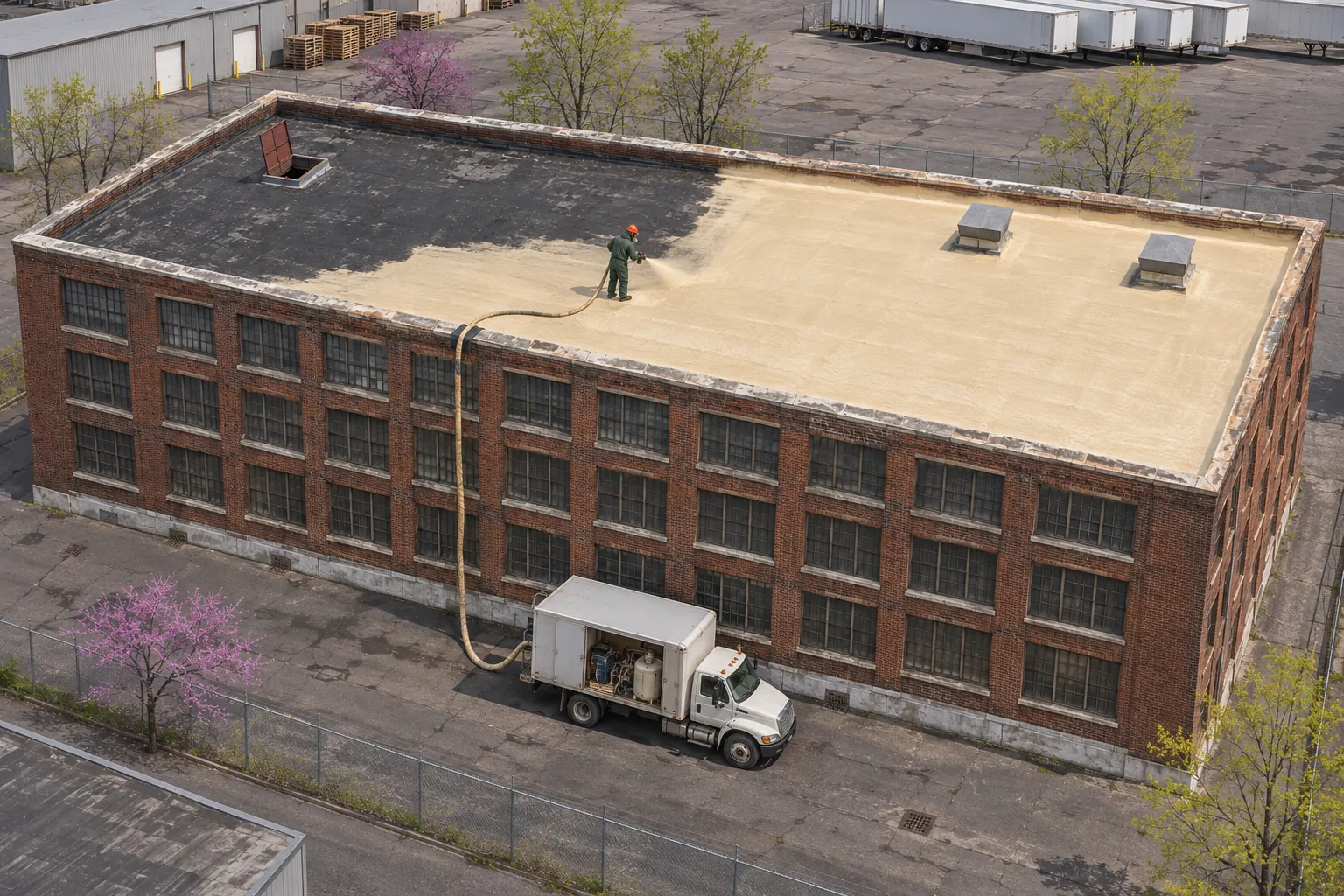
Philadelphia spray foam roofing works over a dry, attached roof that needs insulation or a smoother surface. These cases show the fit.
One sprayed layer adds insulation and covers old patches with a continuous surface.
Ribs get filled and fasteners buried, ending the screw-by-screw leaks.
Extra thickness builds up low spots and sends water toward drains.
Spraying over loose metal or wet insulation hides the problem and lets it grow underneath.
Foam bonds to whatever is under it, so the roof below gets a hard look in five areas before any spraying.
Moisture under the old roof turns to vapor and lifts foam. A moisture survey and core cuts show which areas come out before spraying. Wet board comes out before spraying.
Panels that move under foot flex the foam above them. Loose sheets get fastened down so the foam sits on a stable base. Loose sheets are screwed down first.
Foam runs up parapets and over edges, so loose coping and soft mortar at the roof line are repaired first. Coping gets reset where it rocks.
Overspray drifts in wind. Air intakes, cars, and nearby buildings get covered, and spraying stops when gusts pick up. Car covers stay on until the foam cures.
Pipes, curbs, and drains get foam built up around them carefully so water flows past each opening rather than toward it. Each opening gets a smooth foam collar.
Foam roofs differ in thickness and topcoat. These four choices come up on most flat and metal roofs we look at.
A full foam roof needs its own price, separate from the $2.50 to $4.00 coating range, because foam thickness and repairs drive it.
Silicone over foam handles lingering water and strong sun, and later gets recoated with silicone.
Acrylic works over foam on roofs that drain quickly, with a granule broadcast in walk areas.
An aging foam roof with a worn topcoat but firm, dry foam can take a fresh topcoat after cleaning and repair of any damaged spots.
A foam roof and a new conventional roof both start over the existing deck. These are the main differences.
| What Changes | Coating The Roof | Replacing The Roof |
|---|---|---|
| Planning basis | Foam priced on its own scope | About $5 to $8 per square foot |
| Insulation | Added by the foam layer | Separate boards under membrane |
| Old roof | Left in place if dry and attached | Removed down to the deck |
| Low spots | Built up with extra foam | Corrected with tapered board |
| Upkeep | Topcoat renewed over firm foam | Membrane seams and flashing |
| Fasteners | Buried under the foam layer | New fasteners in the new roof |
Foam adds insulation and covers old patches in one layer. Get a ballpark coating range and ask for a foam scope during the roof walk.
Foam goes on fast, but the setup takes longer. These five steps cover a typical job.
We check attachment, deck condition, and moisture across the roof, and mark wet areas and loose panels for repair before spraying.
Saturated insulation and membrane are cut out and filled so the foam goes over a dry, even surface.
Intakes, windows, vehicles, and edges get covered, and a wind plan is set for the days we spray.
Foam goes on in passes to the written thickness, built up at low spots and run onto walls and curbs.
The protective coating goes on soon after the foam so sunlight cannot damage it, with granules on walk paths.
Foam needs a topcoat, and some roofs need a coating elsewhere too.
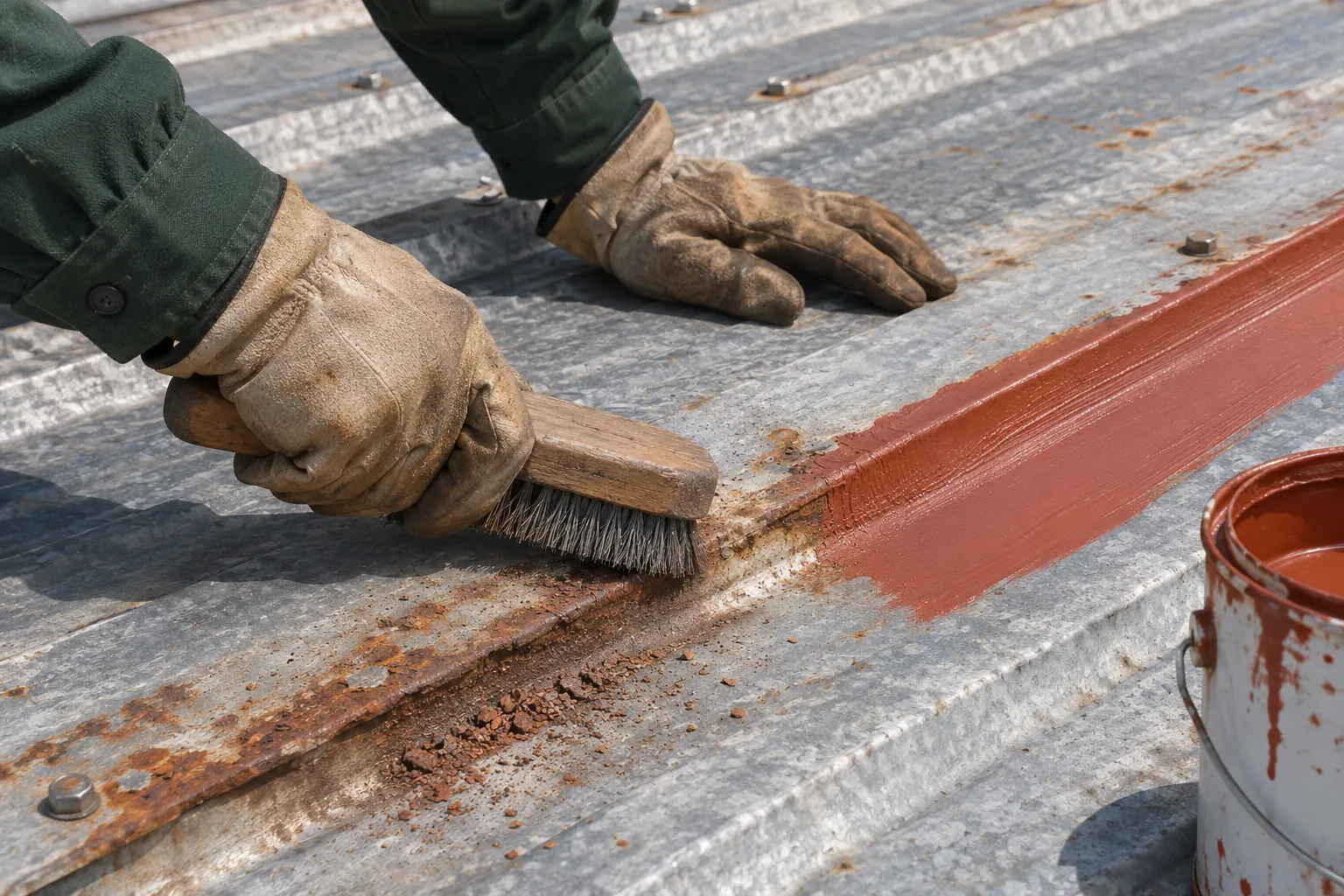
Metal sections that need coating rather than a full foam layer go here.
Commercial Metal Roof Coating in Philadelphia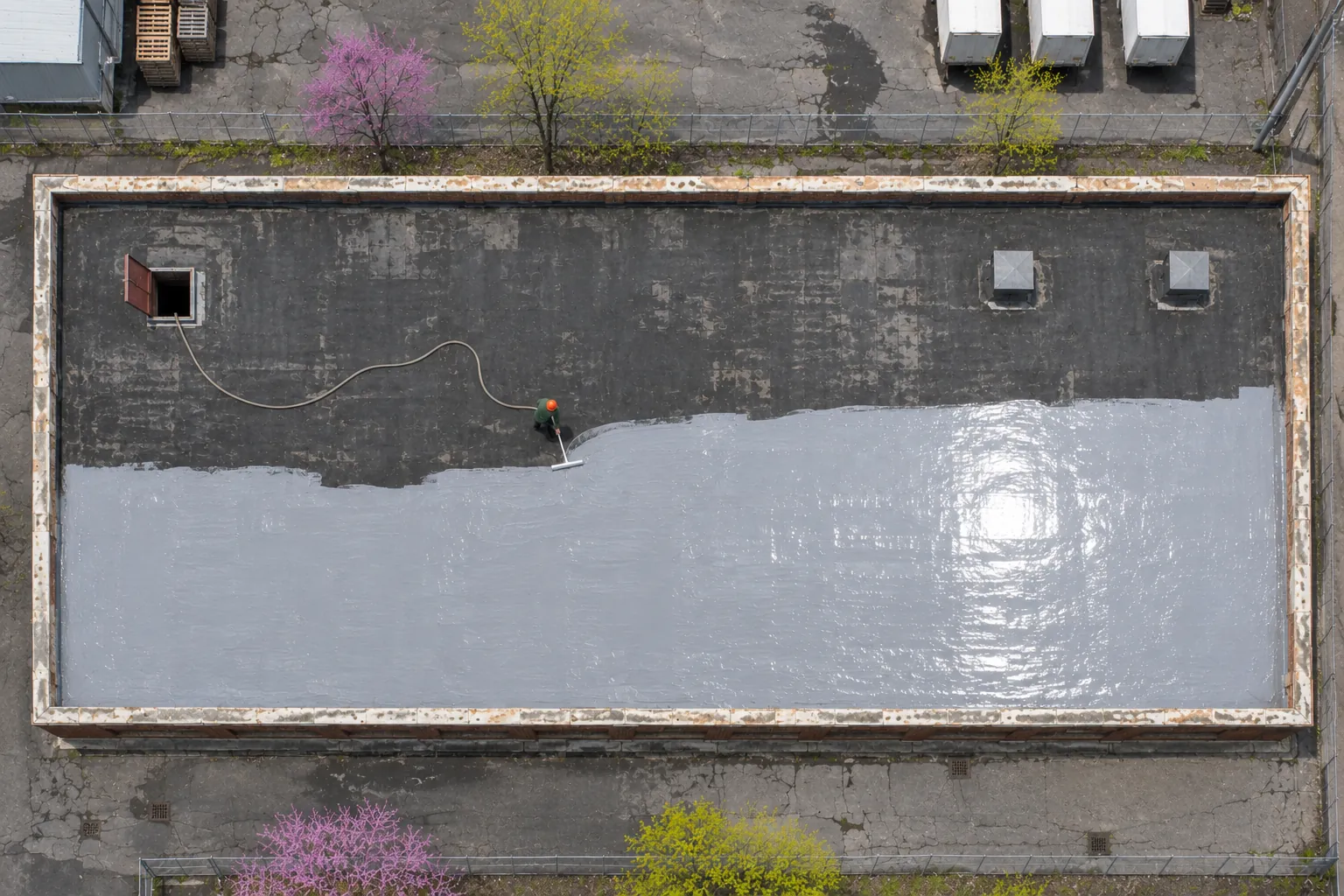
Our most common topcoat over foam on flat roofs that hold some water.
Silicone Roof Coating in Philadelphia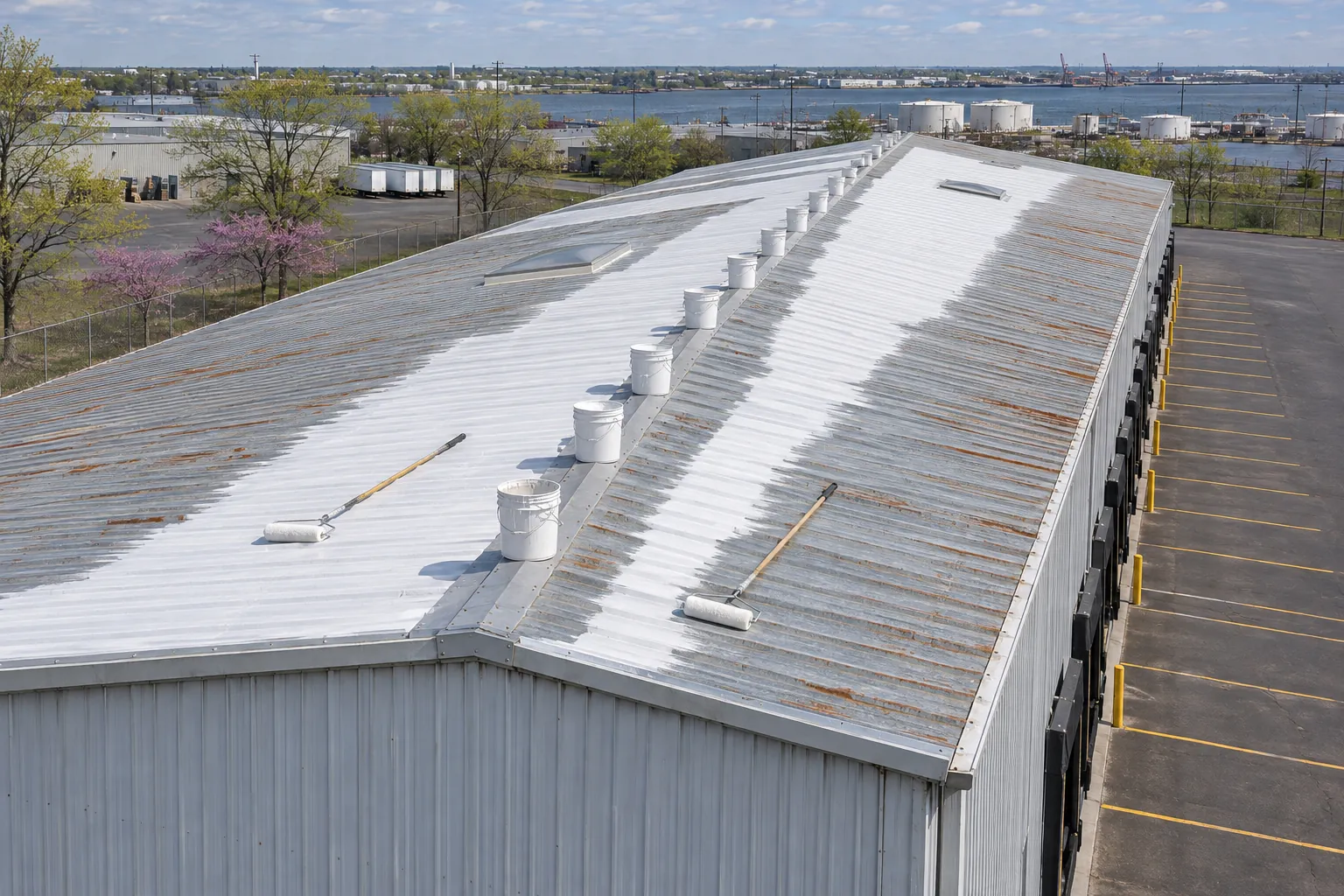
Quick-draining foam roofs can take this lighter topcoat.
Acrylic Roof Coating in Philadelphia
Shingled faces next to a foam-covered flat section need their own check.
Shingle Roof Coating in PhiladelphiaFoam stops leaks from screws and laps once the metal is fastened down and the insulation below is dry. Over loose panels or an unknown leak source, it only hides the problem, so we find the source first.
A foam roof keeps working as long as the foam stays dry and the topcoat keeps sunlight off it. Punctures, exposed foam, and moisture are what we check for, and renewing the topcoat over firm foam extends service.
The work stays on the roof, but fumes and overspray need control. We cover air intakes, schedule around shift changes where needed, and set wind limits for spraying.
Loose gravel is removed first and the surface is cleaned and checked for moisture. Foam needs a firm, clean base to bond to.
It can, in a good way. Extra foam builds up low areas and creates gentle slopes toward drains, which helps flat roofs that pond.
Thickness depends on the insulation the building needs and the low spots being filled. The scope lists a minimum thickness across the roof and extra build-up at ponding areas and drains.
Yearly checks look for punctures, worn topcoat, and bird or foot damage. Small punctures get sealed right away so water never reaches the foam, and the topcoat gets renewed while the foam is still firm.
Yes, once the coping and mortar at the roof line are repaired. Foam runs up the inside of the parapet to a clean edge, and the topcoat covers it all the way up.
Tell us about the roof surface and any cold spots or leaks below. We will check moisture and write the foam scope.