
Loose Attachment
Panels that lift underfoot or rattle in wind have lost their grip on the purlins. New fasteners or structural repairs come before surface work. Purlin clips are checked where panels move most.
As a Chester metal roof coating contractor, we check attachment, hidden moisture, and old finishes on equipment buildings before we price any coating.
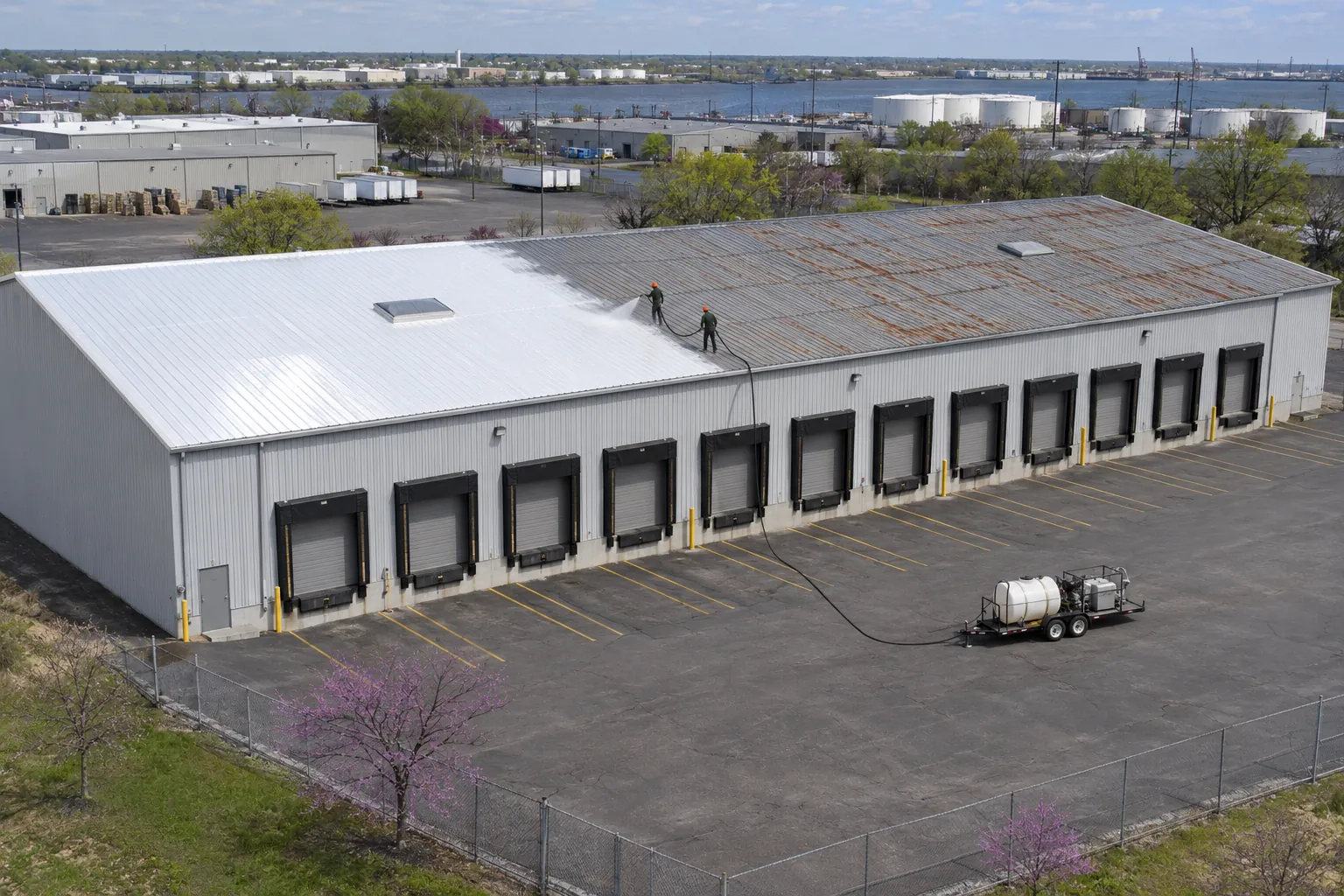
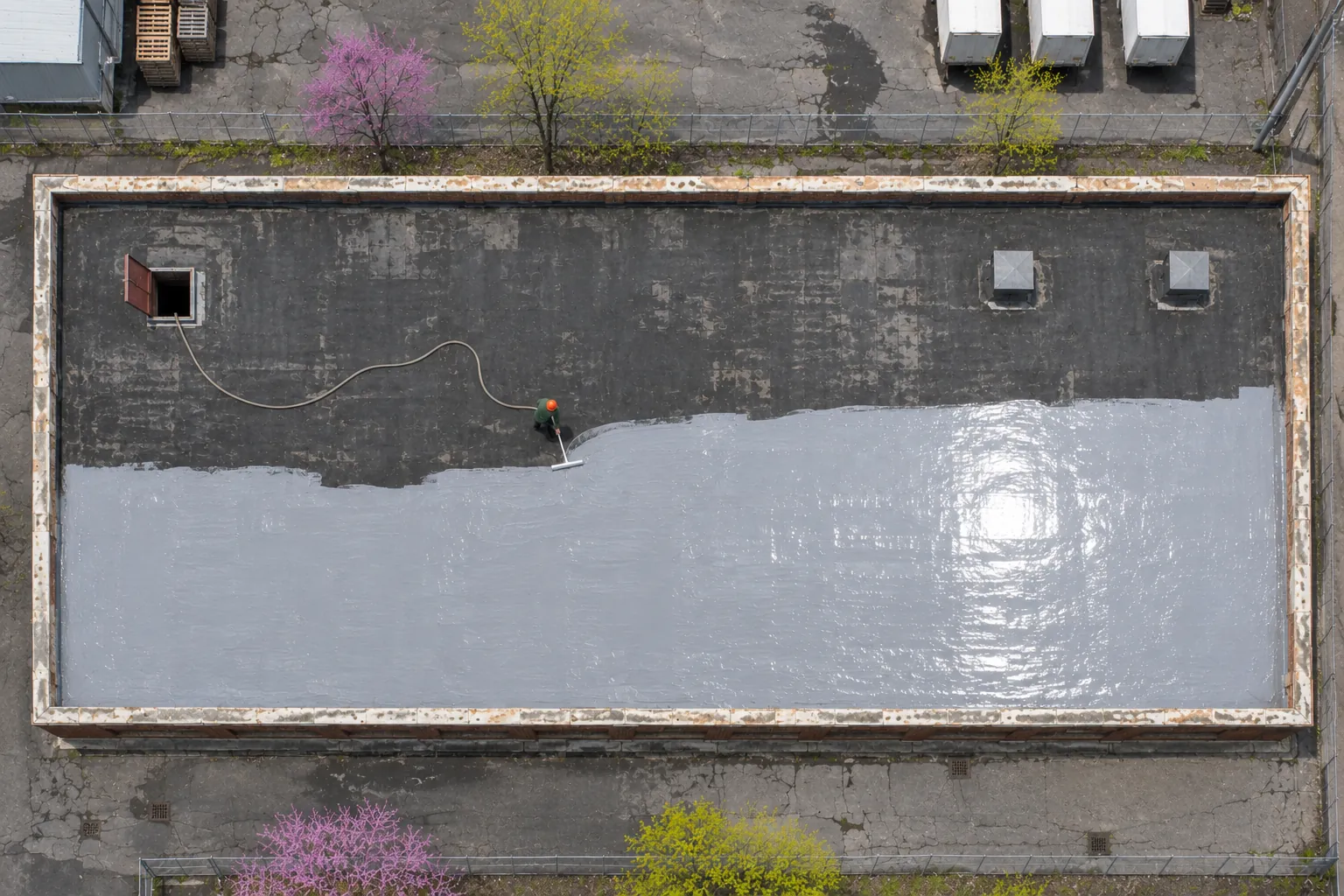
Chester metal roof coating jobs often start on equipment buildings and older plant roofs. Before coating, we look for what would stop it: panels that flex, insulation holding water, and old finishes that refuse a new coat. Anything that needs replacement goes into the scope first, so the coating sits on roofing that holds.
When the roof walk turns up more repair than coating makes sense for, the scope says so plainly. Some owners repair this year and coat the next, and the scope is written to allow that order.
On plant and equipment roofs, these are the conditions that push work toward repair or replacement first.
Panels that lift underfoot or rattle in wind have lost their grip on the purlins. New fasteners or structural repairs come before surface work. Purlin clips are checked where panels move most.
Insulation soaked by years of small leaks hides under dry-looking panels. Wet sections come out, since coating would lock the water in. Each core cut is patched the same visit.
Some older coatings and paints peel when tested. Those finishes are stripped or primed according to what the adhesion test shows. Pull tests show which finish has to go.
Equipment exhaust can leave residue on panels downwind. Residue blocks bonding, so those areas get degreased and retested. Downwind panels get a second cleaning pass.
Rust can wear sheets so thin they bend under a hand press. Those sheets get replaced rather than coated. Hand presses at each bay find the weak spots.
On an equipment building, the honest comparison includes the repairs coating would need first.
| What Changes | Coating The Roof | Replacing The Roof |
|---|---|---|
| Planning cost | About $2.50 to $4.00 per square foot plus repairs | About $5 to $8 per square foot |
| Weak panels | Replaced individually first | All replaced |
| Wet insulation | Removed in sections | Replaced throughout |
| Equipment below | Stays covered by existing roof | Needs protection during tear-off |
| Exhaust areas | Cleaned and retested | New panels around penetrations |
| Timing | Repairs first, coating after | One larger project |
These four paths cover the equipment and plant roofs we look at in Chester.
Roofs over compressor rooms and shops take a metal system once attachment and moisture are confirmed.
Flat roofs over equipment rooms that hold water near drains suit silicone after wet areas are replaced.
Cold equipment buildings with dry, fastened roofs can take foam to add insulation and seal penetrations.
Some Chester roofs need structural or panel work this year and coating later, and the scope says so.
Wet insulation found by core cuts is removed bay by bay and rebuilt flush, so the coated roof sits on dry board throughout.
Panels under process exhaust get degreased, retested, and sometimes a sacrificial shield where residue keeps landing.
Weak panels and wet insulation show up in the roof walk. Get a ballpark range first, then let us check the roof. We will also say which repairs come first.
Plant roofs get more checking up front. The order below keeps repairs ahead of coating.
Attachment, panel thickness, and old finishes are checked across every bay, with core cuts wherever insulation feels soft. Each wet or weak area is photographed.
Wet areas are marked on a roof plan so they can be replaced before coating and priced separately. Wet areas are priced as their own line.
Loose panels are refastened and thin sheets replaced so the roof stops moving under foot. New panels match the existing rib profile.
Residue near equipment exhaust is degreased, rinsed, and tested so the coating can grip there too. Retesting confirms the cleaning worked.
With repairs done, seams are reinforced and the field is coated to its written thickness. Thickness readings are logged as we go.
We walk the coated roof with your maintenance lead, mark repaired panels and replaced insulation on the plan, and point out the exhaust areas to watch.
We also take metal roof coating work in these communities near Chester.
Outside these towns? Call us or send us a message.
City warehouses with long screw rows and rusted laps.
Coating staged around trucks and dock doors.
Vent and curb flashing sorted out first.
Weak panels, wet insulation, or an old finish that rejects the new coating. We check attachment and hidden moisture first, and any panel or flashing replacement goes into the scope before coating.
We work in Chester and the nearby towns listed here. Call with the building address and what sits on the roof, and we will arrange a roof walk.
Most work stays on top of the roof. We cover intakes near the work area and coordinate with whoever runs the equipment so exhaust and coating fumes stay apart.
A small core sample shows whether insulation is dry. It is patched right away, and it tells us how much wet material to replace.
When most panels are solid and the insulation is dry, coating protects the metal for a fraction of replacement cost. When the roof is weak across the board, we recommend replacement.
Roofs exposed to process exhaust or chemicals need a coating rated for that exposure. We look at what the equipment vents before picking the system, and test the cleaned surface first.
Yes. Roof work near intakes or vents is timed for shutdowns or low-output hours, and the rest of the roof is coated while production continues below.
Deck or purlin rust that weakens the structure needs a structural repair before any roofing work. We flag it in the scope and recommend the right trade for it.
Call about your plant or equipment building roof, or start with a ballpark range.