
Taped Seams
Old butyl or foil tape often lets go at the edges. Lifted tape is removed and the lap cleaned to bare metal. Adhesive residue is scraped off before priming.
As a Lansdale metal roof coating contractor, we test old seam patches for bond and trapped rust, strip the loose ones, and rebuild those seams before coating.
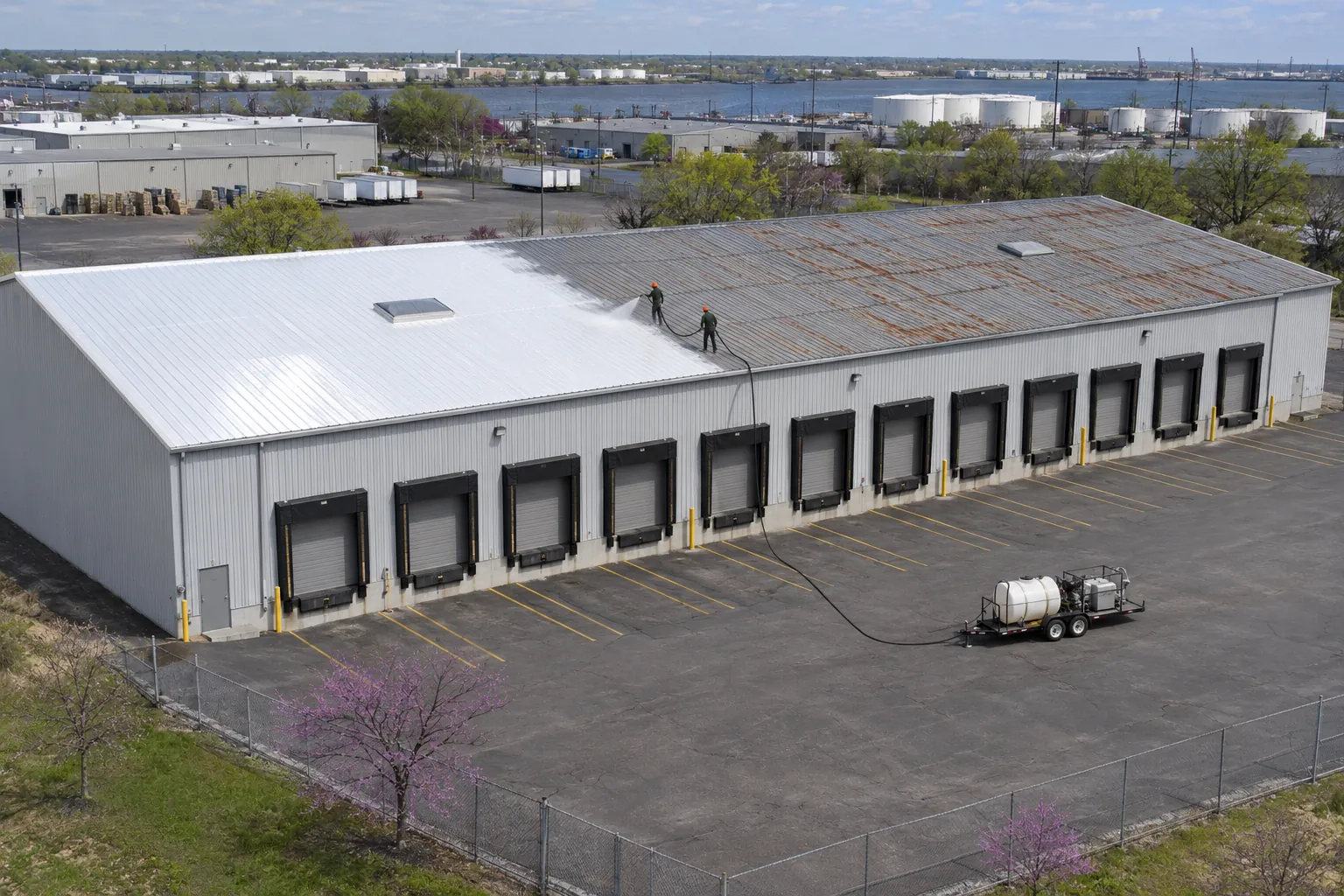
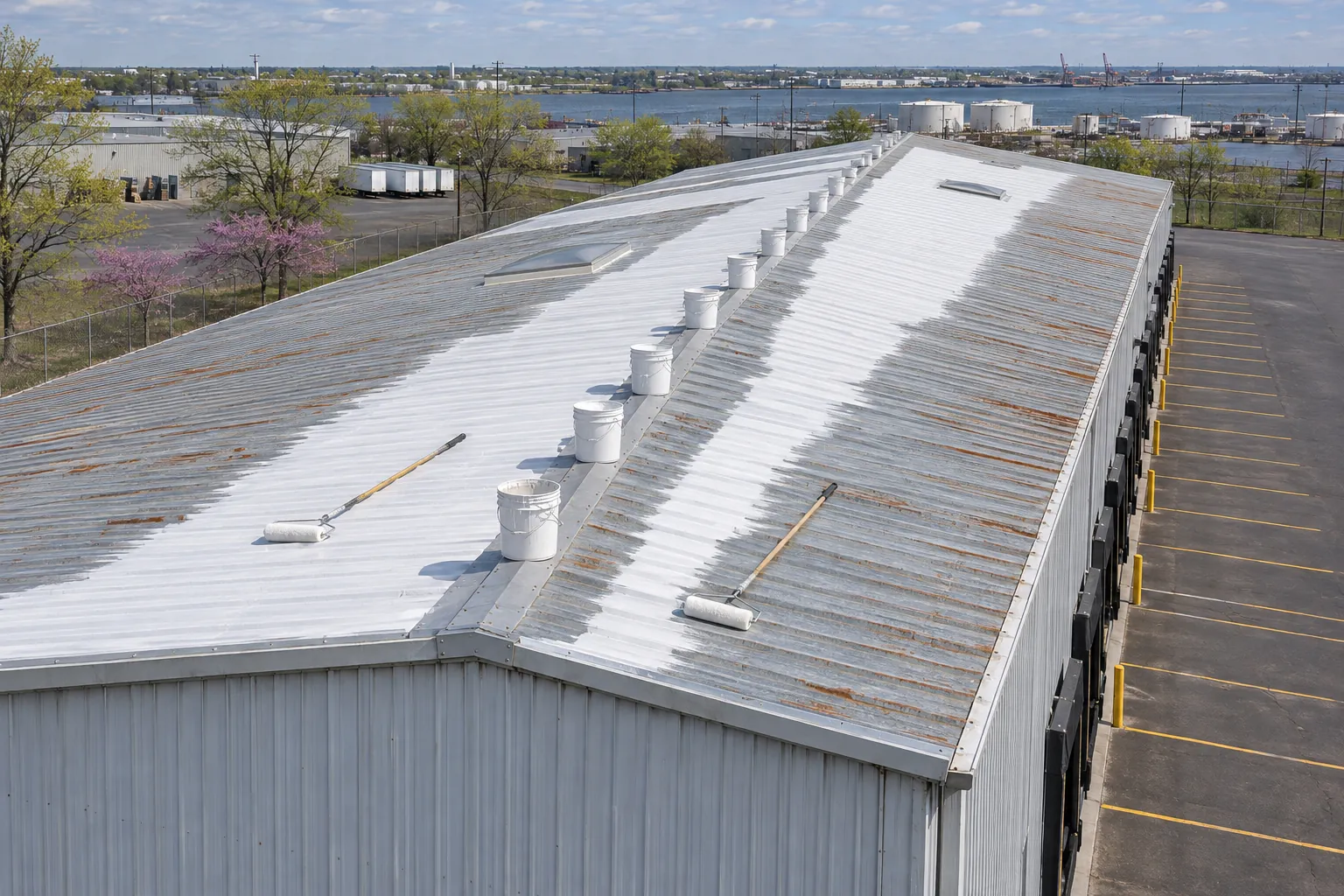
Lansdale metal roof coating work often meets years of seam patches: mastic, tape, caulk, and spot coatings layered over each other. Each patch is pulled at the edge and probed for rust underneath. Patches that hold and match the new system stay; the rest come off so the seam gets a proper reinforced detail.
Mixed patching usually means mixed products. Tape, asphalt mastic, and acrylic patches each react differently to a new coating, so the patch map shows which material sits where before we choose a primer.
Patched roofs need more attention in a few places. These zones get checked one by one.
Old butyl or foil tape often lets go at the edges. Lifted tape is removed and the lap cleaned to bare metal. Adhesive residue is scraped off before priming.
Thick asphalt mastic can bleed through light coatings. Heavy buildup comes off, and thin residue gets a blocking primer. Blocking primer stops stains from coming through.
Water trapped under a patch rusts the lap faster than open metal. Probing finds it before it hides under new coating. Probe holes are sealed right away.
Caulk blobs over screws hide stripped holes. Each one gets uncovered, checked, and replaced if loose. Spun screws get oversized replacements.
Curb flashing patched many times often has gaps behind it. Those curbs are re-flashed rather than patched again. New flashing ties into the coated field.
A heavily patched roof makes owners wonder about starting over. This is how the two paths compare.
| What Changes | Coating The Roof | Replacing The Roof |
|---|---|---|
| Planning cost | About $2.50 to $4.00 per square foot plus patch removal | About $5 to $8 per square foot |
| Old patches | Tested; loose ones stripped | Removed with the panels |
| Rust at laps | Treated where found | Gone with the old metal |
| Seams | Rebuilt with fabric before coating | New laps on new panels |
| Timeline | Patch work adds prep days | Tear-off and install days |
| Repeat leaks | Stopped by rebuilding seams | Stopped by new panels |
Patched roofs land in one of these four groups after the patch test.
Patches that pass the pull test and match the system stay in place, primed and coated over.
Loose or incompatible patching comes off and the seams get fabric, base coat, then the full coating.
Roofs that leak again after every patch usually need the seams rebuilt once and coated, instead of another round of patches.
Laps rusted thin under patches get new panels before the coating goes on.
Lifted butyl or foil tape comes off, the lap is cleaned to bare metal, and fabric plus base coat replace it.
Curbs patched again and again get new flashing tied into the coating, ending the cycle of fresh caulk every year.
Repeat leaks at patched seams usually mean the seam needs rebuilding once. Get a ballpark range and a roof walk.
Patched roofs add a test-and-strip stage. Everything else follows the usual order.
Every patch is mapped, edge-pulled, and probed, along with screws, laps, curbs, and gutters. Each patch gets a number on the roof map.
Failed tape, cracked caulk, and heavy mastic come off by hand and scraper down to clean metal. Scrapings are bagged and removed daily.
Rust found under patches is cleaned and primed, and laps rusted thin get new panels. New panels match the existing ribs.
Each seam gets a base coat with fabric pressed in, tying old and new sections together. Fabric overlaps the old and new metal.
The field coat goes over rebuilt seams and well-attached patches alike at the written thickness. Gauge readings are taken at rebuilt seams.
We walk the finished roof with you, show which seams were rebuilt and which patches stayed, and mark them on the roof map for future checks.
From Lansdale, we also coat commercial roofs in these communities.
Outside these towns? Call us or send us a message.
City warehouses with long screw rows and rusted laps.
Coating staged around trucks and dock doors.
Peeling coatings traced to their cause.
They can be. Old patches bond differently from the panels and can hide rust or movement. We test each one, keep the ones that hold, and remove the rest so the seam gets a reinforced detail.
The planning range is about $2.50 to $4.00 per square foot of roof. Stripping patches, treating rust under them, and rebuilding seams add prep time, which pushes patched roofs toward the upper end.
Yes, we coat small and large commercial roofs in Lansdale. Smaller roofs still get the same patch test and seam work.
A patch over a moving, rusting seam often leaks again within a season or two. Rebuilding the seam once with fabric and coating stops the cycle.
Thin, tightly stuck mastic can stay with a blocking primer. Thick or soft mastic comes off, since it bleeds through and softens light coatings.
We pull at the patch edge, press for soft spots, and probe beneath it for rust or water. A patch that peels easily or hides wet rust comes off.
Some can, if each passes the pull test and the coating maker approves it. Asphalt-based patches usually need a blocking primer, and silicone caulk has to come off entirely.
Rebuilt seams show a slightly raised line where fabric sits under the coating. That line is the reinforcement doing its job at the joint.
Tell us how often the seams get patched and how big the roof is. We will test the patches and price the work.