Eaves And Rake Trim
Gusts lift loose eave trim and rake flashing first. Once a corner pulls up, rain drives under the first panel and shows up as a wet stripe along the outside wall.
As a Philadelphia metal roof coating contractor, we clean, repair, and coat commercial metal roofs on warehouses, plants, and loft buildings in the city and five nearby towns.
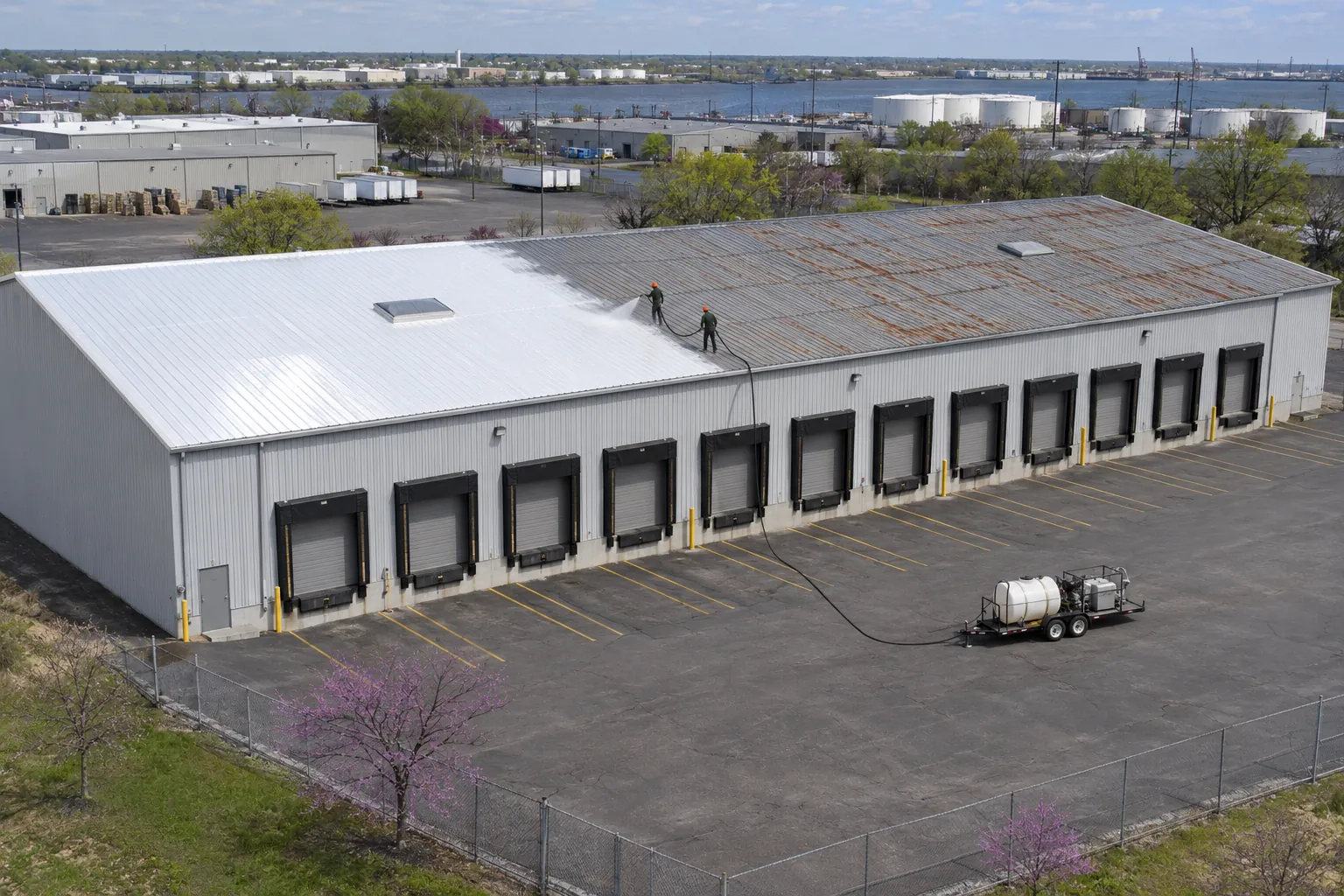
Before any Philadelphia metal roof coating goes down, we walk these five parts of the roof, because each one fails in its own way.
Gusts lift loose eave trim and rake flashing first. Once a corner pulls up, rain drives under the first panel and shows up as a wet stripe along the outside wall.
Panel laps open a little with every hot afternoon and cold night. Rust starts in the overlap where water sits, then bleeds out as an orange line you can see from the ground.
Exposed screws back out and their rubber washers crack after years of sun. Each loose screw becomes a small hole, and a row of them can wet a long strip of insulation.
Rooftop units, exhaust fans, and pipe boots break the panel pattern. Sealant at those openings dries out long before the panels do, so curbs leak early.
Snowmelt backs up behind ice in gutters and valleys, then climbs under laps that shed rain fine all summer. Clogged outlets make it worse on every thaw.
Five systems cover most commercial roofs we see. Use the arrows to compare them, then open the one that matches your building.
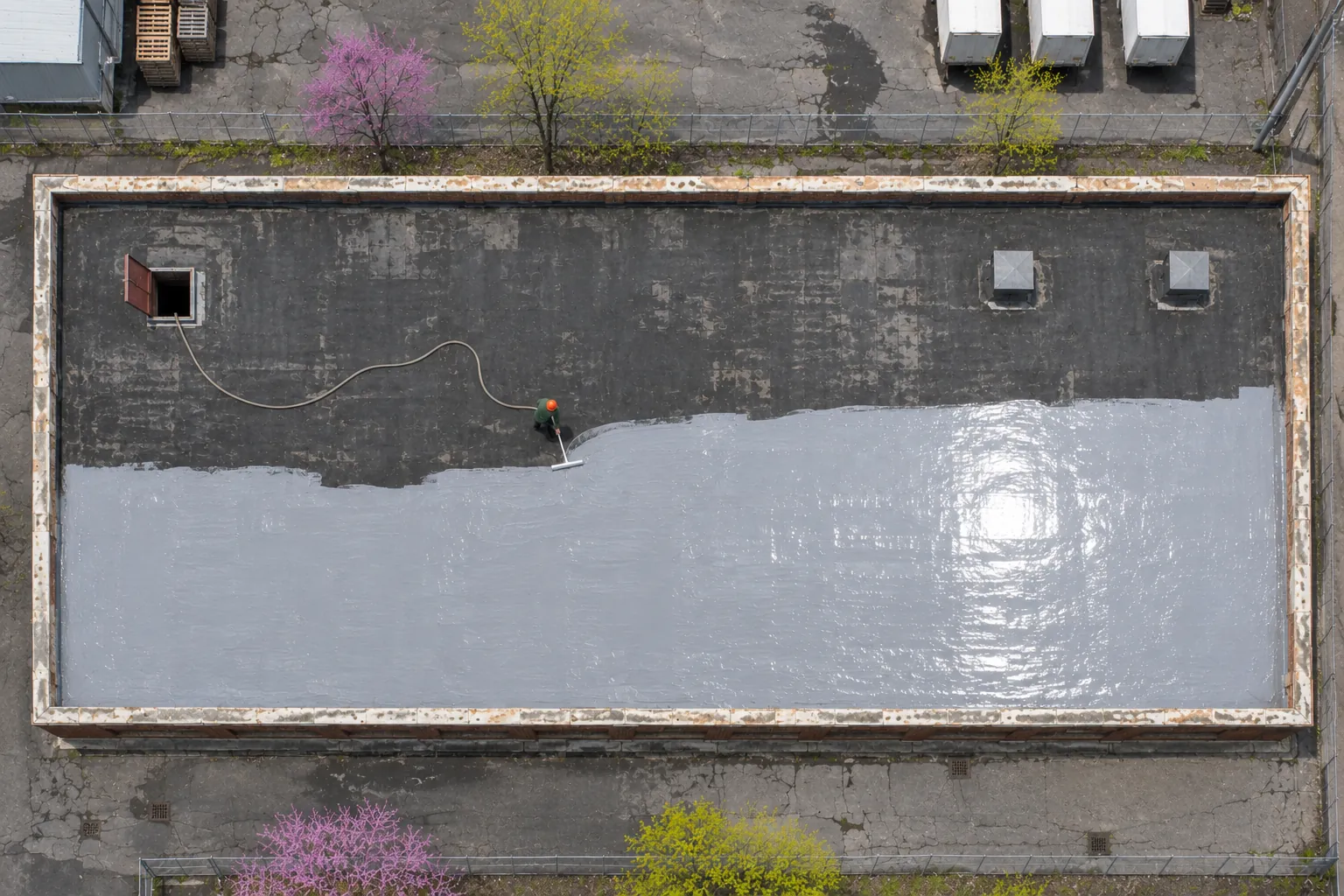
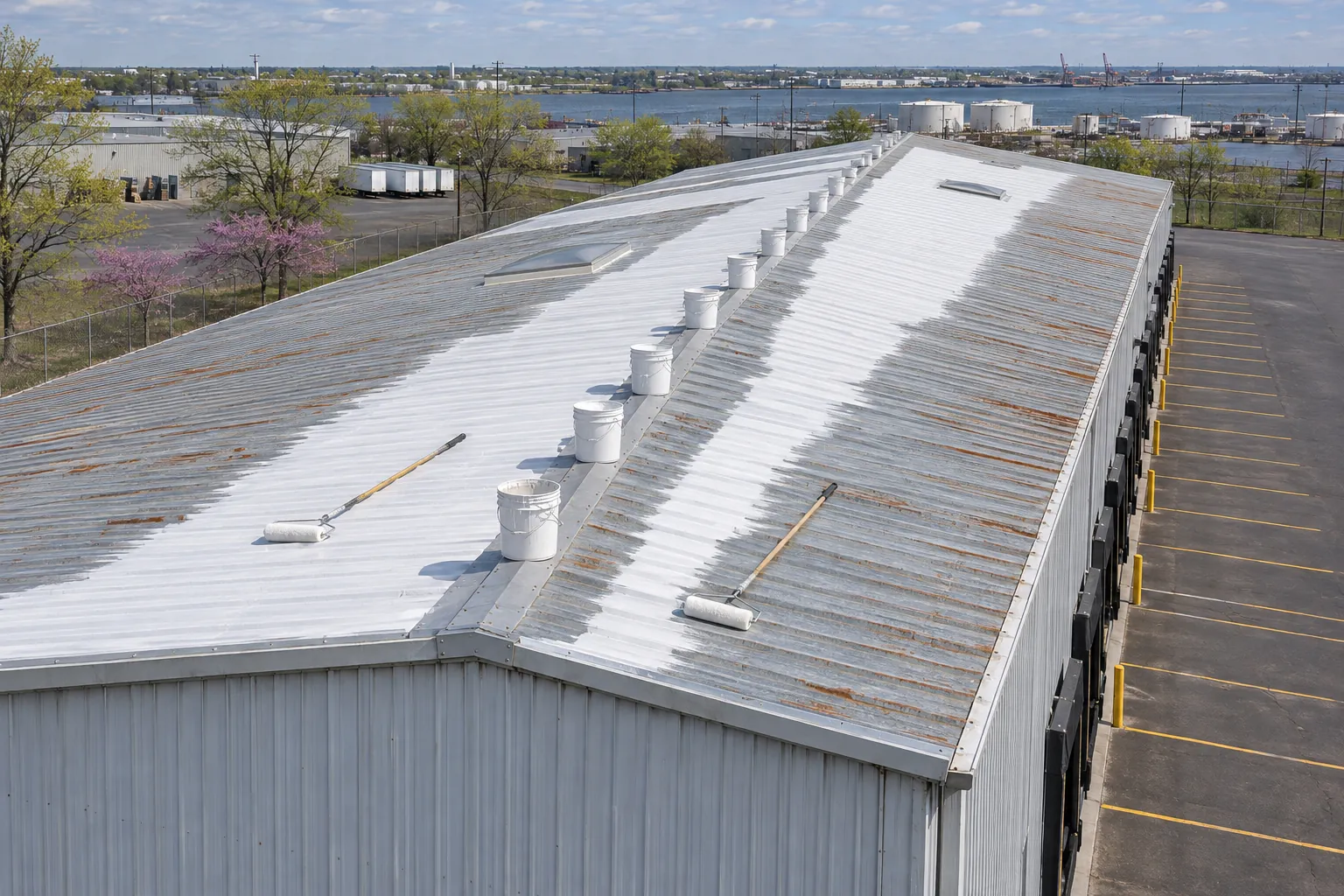
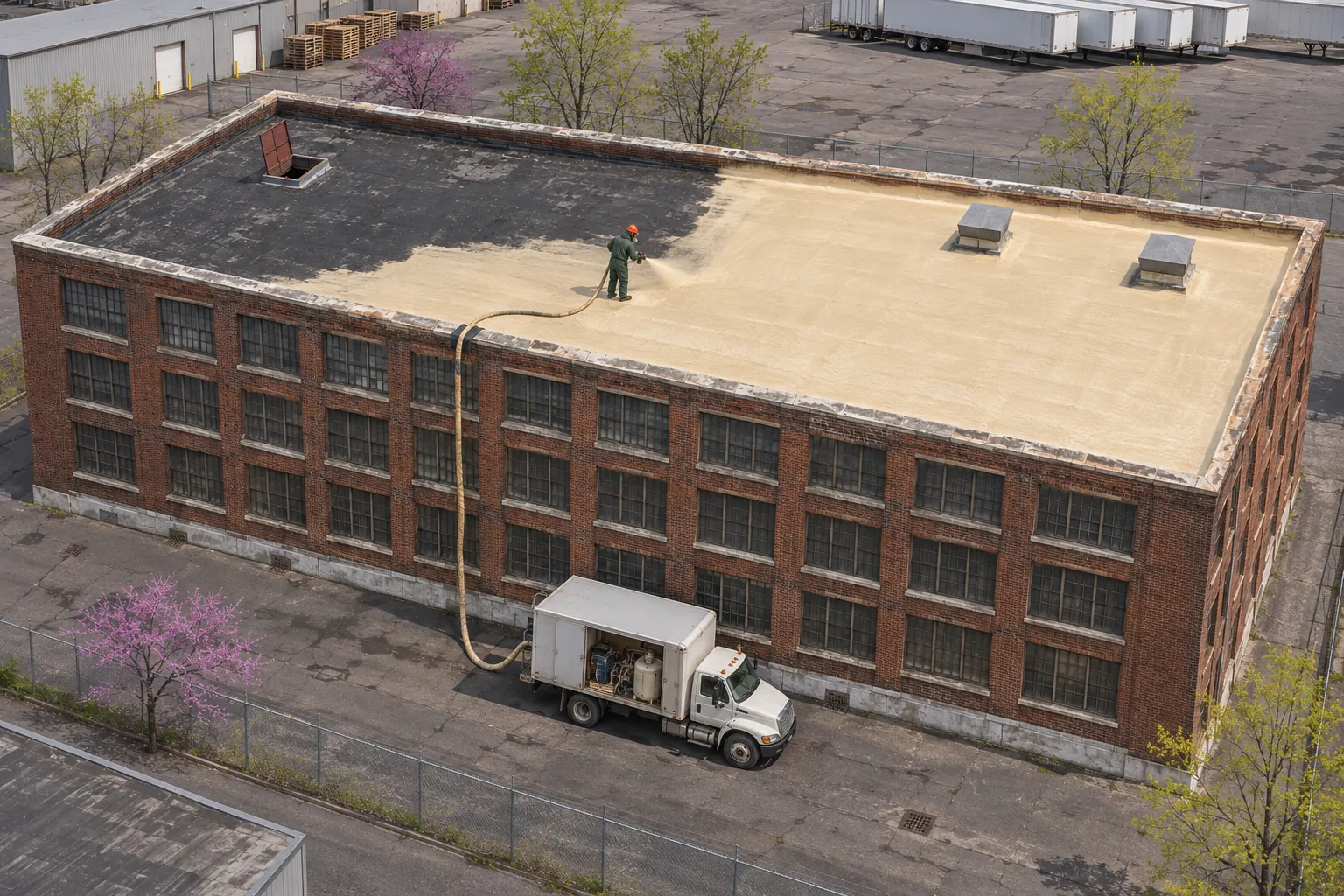
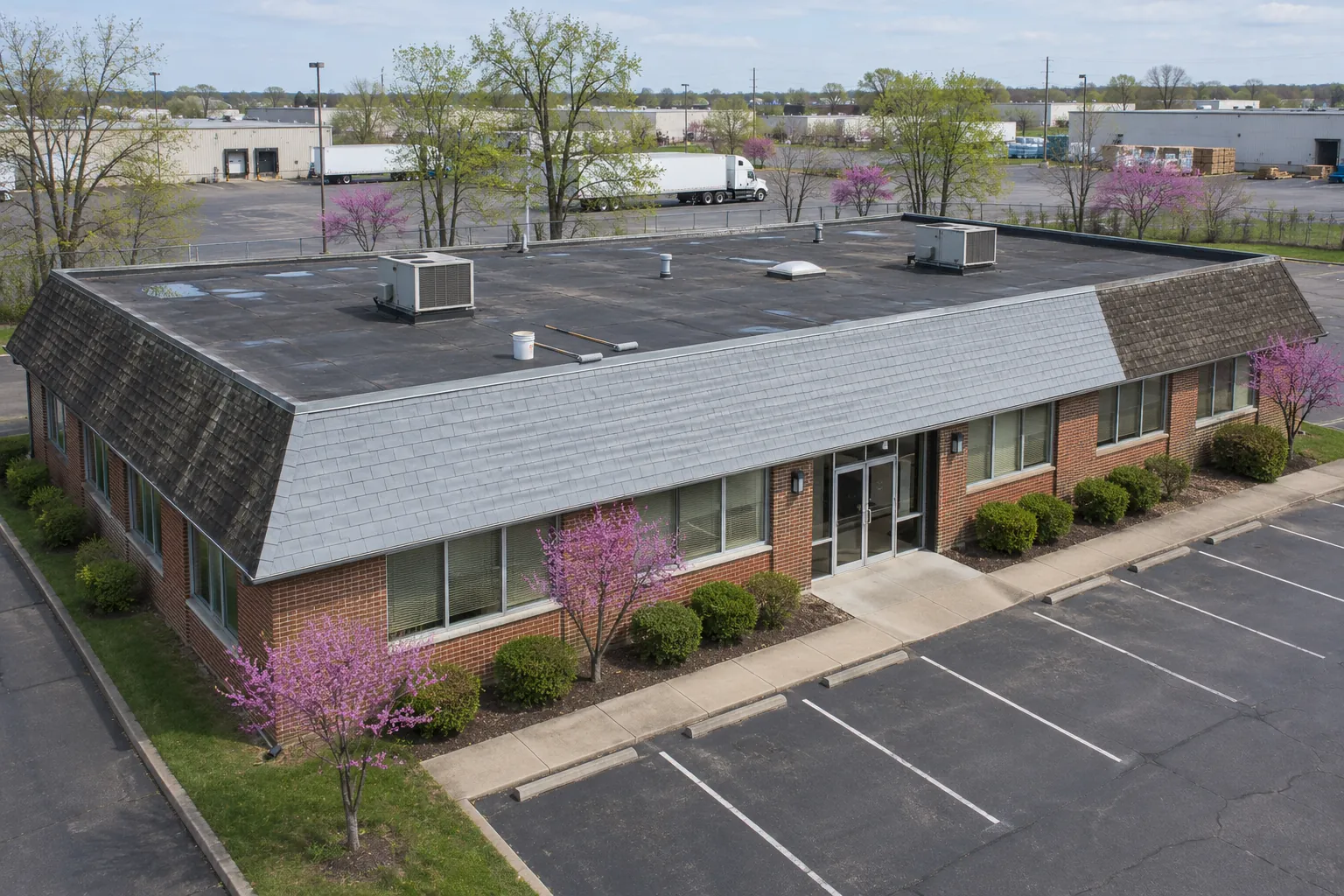
Owners usually weigh the two side by side. These are the differences that change the decision on a metal building.
| What Changes | Coating The Roof | Replacing The Roof |
|---|---|---|
| Planning cost | About $2.50 to $4.00 per square foot of roof | About $5 to $8 per square foot of roof |
| Old panels | Stay in place after rust and seam work | Torn off and hauled away |
| Building use | Docks and floors often keep running | Interior protection during tear-off |
| Rotted metal | Swapped panel by panel before coating | Replaced across the whole roof |
| Wet insulation | Cut out and replaced first | Replaced with the new roof |
| Paperwork | Scope written out for permit review | Full replacement permit review |
Orange streaks below the laps mean the overlap is holding water. Send us the roof size and condition and get a ballpark range for coating and replacement.
Match what you see on your roof to the closest card. Each one points to the first job we would do.
Wire brushing and rust primer prepare the steel, then laps and screws are sealed.
Loose fasteners get swapped for oversized screws with new washers before any coat goes on.
Ponding points to blocked outlets or sagging deck, which we trace before picking a system.
Perforated sheets carry no load and need new metal, because coating will only bridge them for a short while.
Five steps, in this order, on every roof we coat. The repair list grows or shrinks with what the roof walk finds.
We walk the panels, laps, curbs, and gutters, pull a few screws, and check the underside where we can reach it for wet insulation or rust from inside.
Rusted-through sheets get replaced, loose screws are upsized, and open laps are re-fastened so the coating sits on steel that no longer moves.
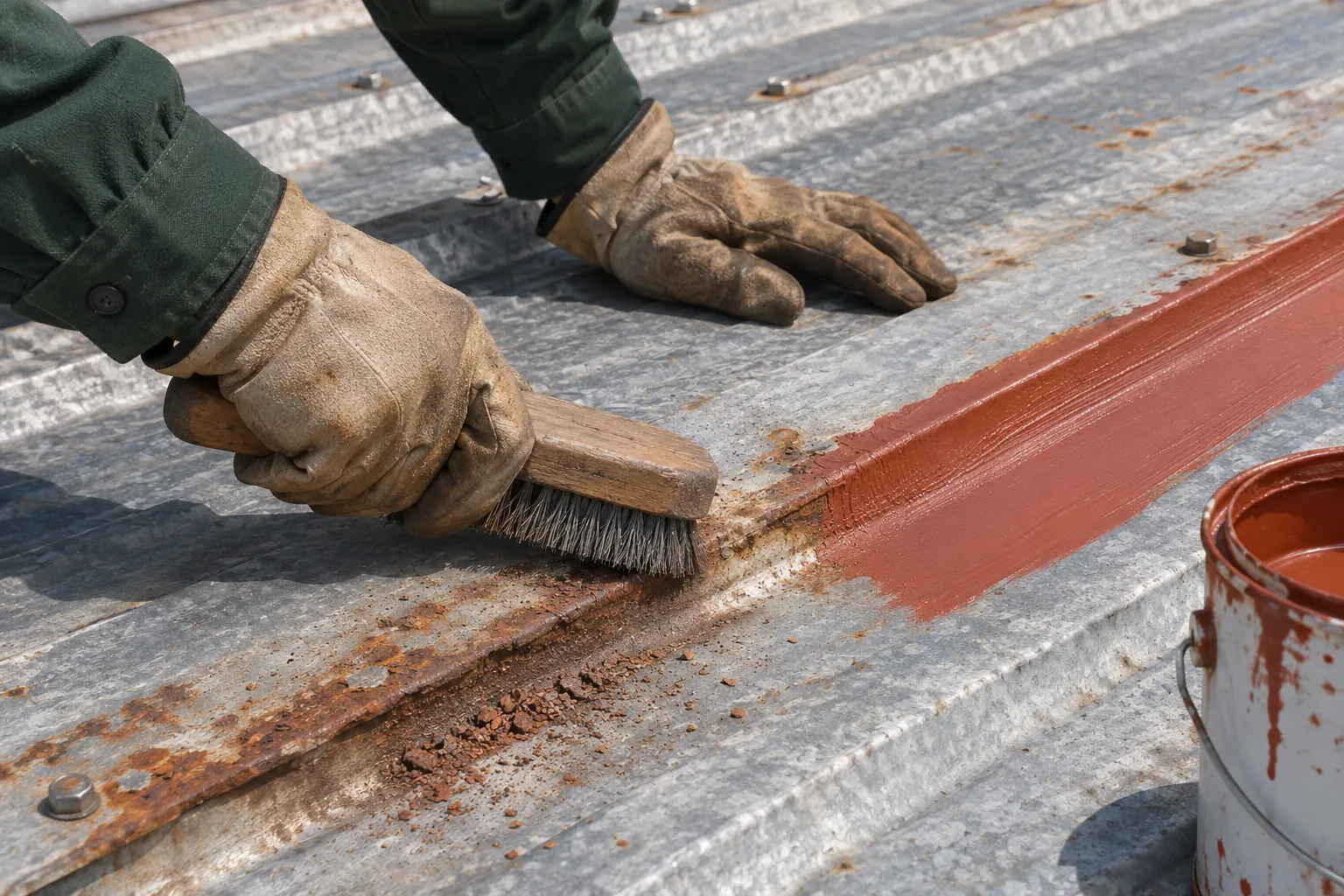
Pressure washing strips chalk and dirt; rust spots get wire brushing and primer so the coating bonds to bare, dry metal.
Seams, screw heads, and curb edges get a reinforced base layer before the full coat, since those details move the most.
The topcoat goes on at the thickness written in the scope, checked with a wet-film gauge as we go, then we walk the roof again with you.
We coat commercial metal roofs in Philadelphia, Norristown, Chester, Lansdale, Yeadon, and Lansdowne, grouped here by the roof work that brings us there.
Outside these towns? Call us or send us a message.
Food distribution and riverfront warehouses with long screw rows and rust at the laps.
Warehouses where coating has to be staged around trucks and loading doors.
Plan on about $2.50 to $4.00 per square foot of roof for coating, against about $5 to $8 for replacement. Where your roof lands in that range depends on how much rust, seam, and screw work comes first, how easy the roof is to reach, and how thick the coating is applied.
Yes, when the rust is on the surface and the steel underneath is still solid. We wire-brush and prime those spots first. Panels with holes or flaking metal at the laps get replaced before coating, because a film over perforated steel will crack where the metal keeps moving.
It comes down to the metal under it, how well the coating gripped, the thickness applied, and the foot traffic it sees later. We write the thickness into the scope and point out the laps and service paths that wear first, so you know where to look during yearly checks.
Usually not for long. We coat in sections and plan staging, wash water, and spray work away from open doors and air intakes. Food areas below active leaks get protected, and a few short windows are often needed when we work directly over a busy door.
Coatings stretch with the panels, but water trapped under laps freezes and pries joints open. That is why we seal the laps and screws before the topcoat, and why gutters and valleys get cleared so snowmelt can drain instead of backing up.
Construction permits in the city go through the Department of Licenses and Inspections. We describe panel replacement, structural repairs, and the coating separately in the scope, since the office needs to see every change on the roof before work starts.
Tell us the roof size and what you are seeing. We will walk the roof, list the repairs, and price the coating.