
If Your Roof
Slopes enough that rain runs off within hours
Acrylic cures on dry surfaces, so quick drainage is the first thing we look for.
Start WithAcrylic coating
As a Philadelphia acrylic roof coating contractor, we roll and spray water-based acrylic onto sloped metal and well-drained roofs during dry, mild stretches.
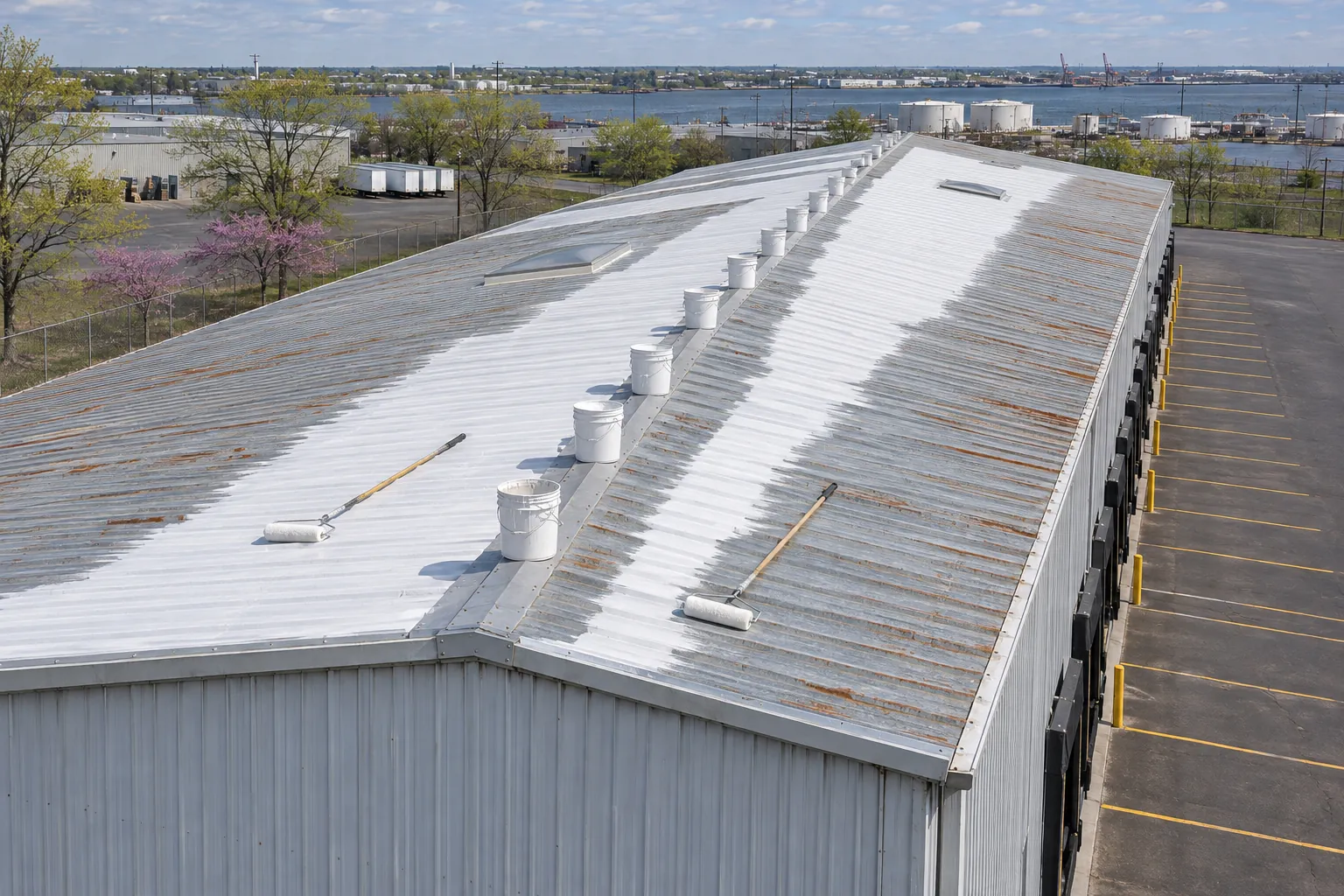
Philadelphia acrylic roof coating needs a roof that sheds water and a forecast with dry, mild days. These cases show the fit.
Acrylic cures on dry surfaces, so quick drainage is the first thing we look for.
Rust spots are primed and laps reinforced, then two acrylic coats go over the field.
A clean, firmly attached acrylic surface takes a fresh acrylic coat with little more than washing.
Standing water softens acrylic, so those areas need drainage work or a silicone system instead.
Acrylic is easy to apply and easy to get wrong. These are the parts of the roof we look at closely first.
Panels near the eave collect the most runoff. Any sag or blocked gutter that holds water there gets fixed or the area switches to another coating. Gutters get cleared before coating.
Joints that open and close daily get polyester fabric embedded in a base coat, so the acrylic can stretch with them. Fabric runs the full length of each lap.
Foot traffic and dropped tools wear acrylic faster near units. We look for wear that reaches bare metal and plan walk pads there. Walk pads mark the path to each unit.
Orange bloom under old paint shows rust spreading beneath it. Those spots are scraped and primed so the acrylic does not lift later. Primer seals the steel before any acrylic.
Cold nights and early dew slow curing, and rain before cure can wash fresh acrylic off. We schedule from late spring into early fall. Forecasts are checked daily during the job.
Acrylic comes in more than one form. These four cards cover the choices for roofs in and around the city.
Over primed steel and fabric-reinforced laps, acrylic adds a bright white surface on ribbed or standing seam roofs.
A base coat in one color and a topcoat in another makes skipped spots easy to see while we apply it.
The coating planning range is about $2.50 to $4.00 per square foot of roof, set by prep, access, and how many coats go on.
A roof that drains well except near one gutter can take acrylic on the slope and silicone at the low strip, joined with a clear transition.
Acrylic is often the lighter-cost way to protect sloped metal. This table shows how it stacks up against new panels.
| What Changes | Coating The Roof | Replacing The Roof |
|---|---|---|
| Planning cost | About $2.50 to $4.00 per square foot | About $5 to $8 per square foot |
| Season | Dry, mild weather for curing | Less tied to temperature |
| Recoat later | Clean and recoat with acrylic | Panel finish ages on its own |
| Drainage | Needs runoff within hours | Slope set by new framing |
| Stock and staff below | Panels stay overhead | Roof opened during removal |
| Color | White or light finish over the field | Factory panel color |
Acrylic needs dry, mild weeks to cure, so spring scheduling fills early. Get a ballpark range now and hold a spot.
Acrylic depends on clean metal and good weather. These five steps keep both in check.
We check slope, gutters, laps, and screws, and watch where water goes after rain so acrylic only goes where runoff is quick.
Chalk, dirt, and loose paint come off with a pressure wash. The roof dries completely before primer, which takes longer on cool mornings.
Rust gets scraped to firm steel and primed. Bare galvanized areas take a primer too, since acrylic grips primed metal far better.
Laps, screws, and curb edges get a base coat with fabric, which lets moving joints flex without splitting the coating.
Base and topcoat go on in different shades during a dry forecast, each at its listed thickness, with drying time between.
Many roofs need acrylic on one part and another system elsewhere.
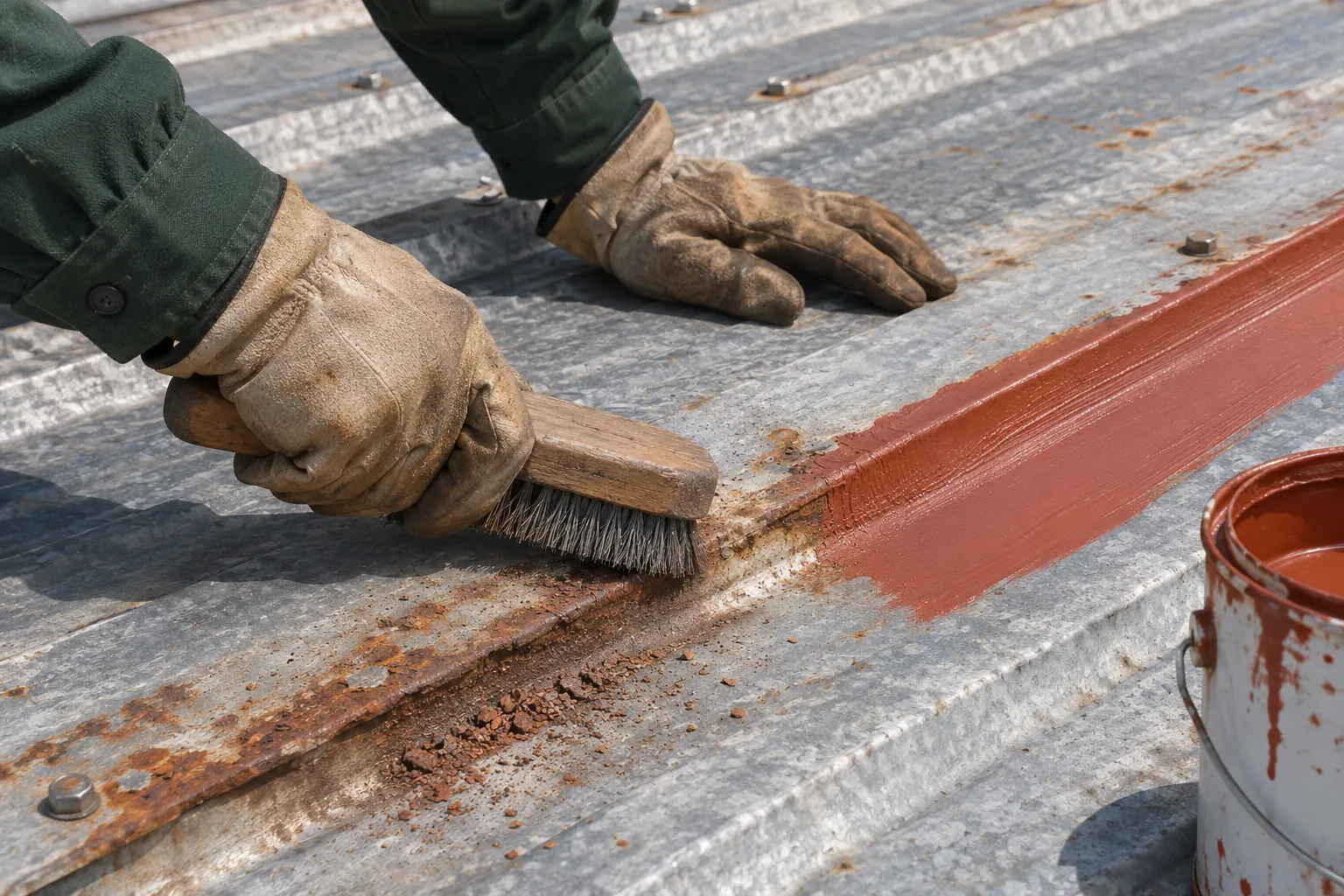
Rust prep and fastener work on steel come before any acrylic goes on.
Commercial Metal Roof Coating in Philadelphia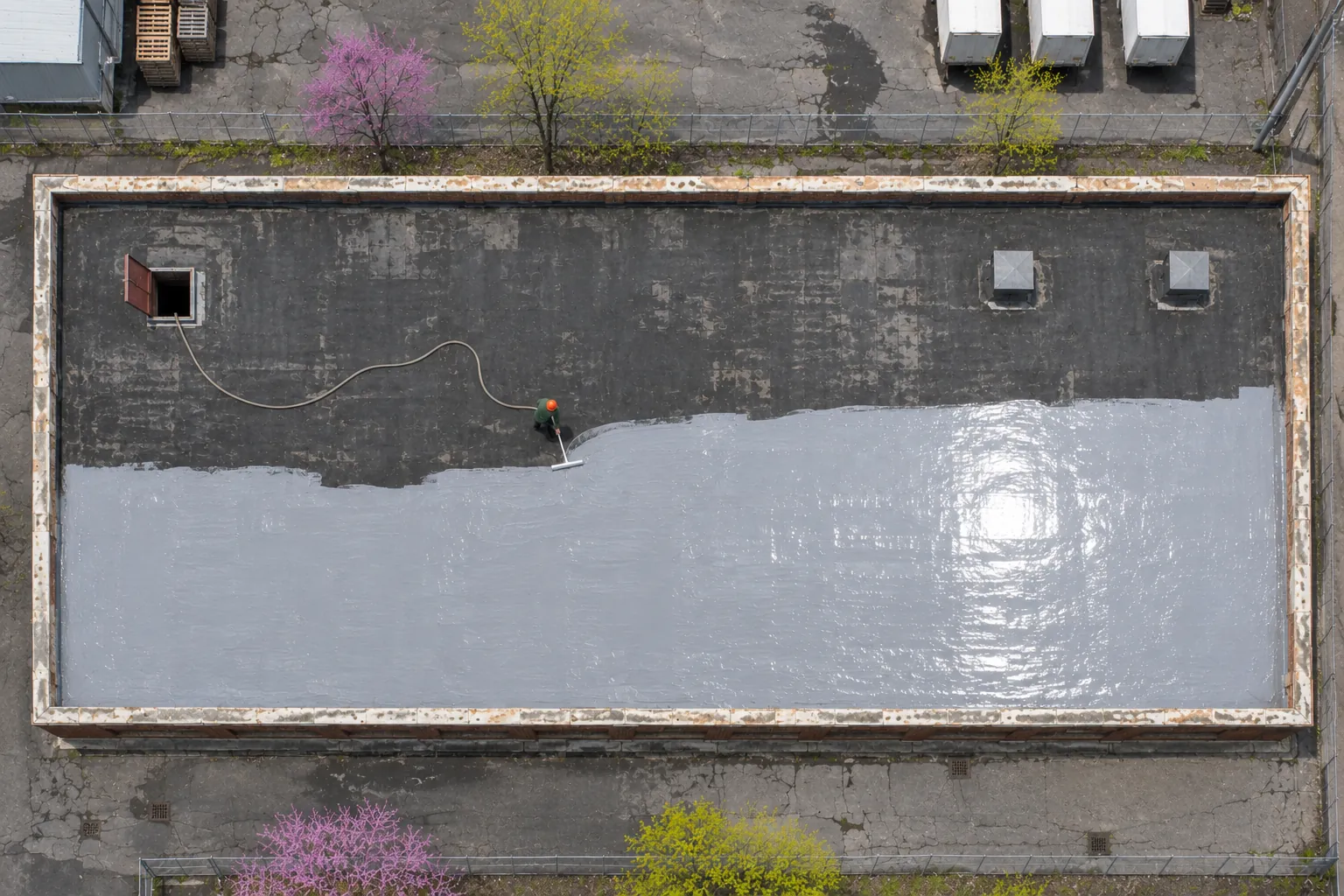
Flat strips or gutters where water stays too long take silicone instead.
Silicone Roof Coating in Philadelphia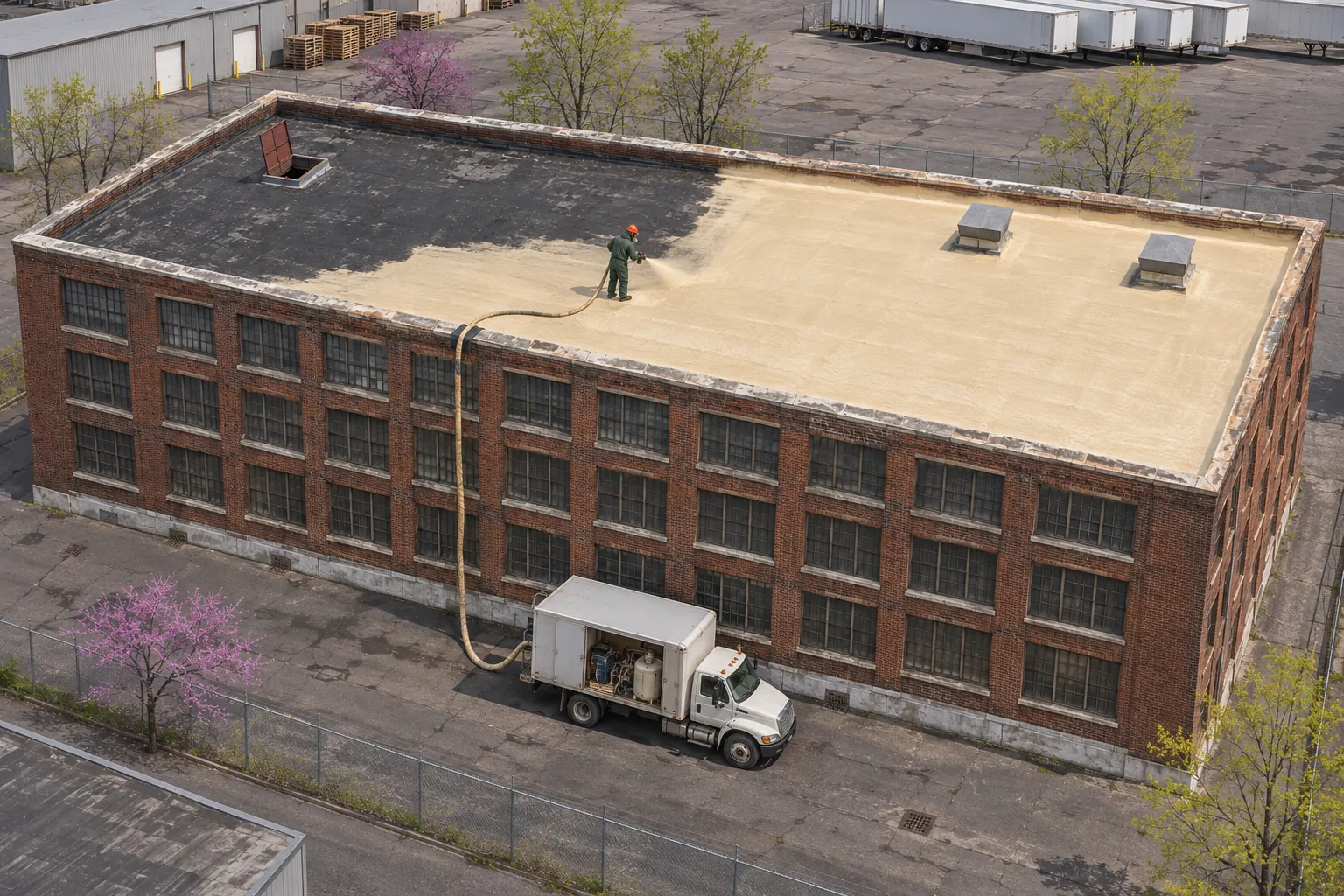
Poorly draining roofs can be reshaped and insulated with foam.
Spray Foam Roofing in Philadelphia
Shingled faces qualify only where the maker allows a coating.
Shingle Roof Coating in PhiladelphiaAcrylic softens under standing water, needs dry and mild weather to cure, and wears thin under heavy foot traffic. On a roof that drains well and sees little traffic, those limits rarely matter.
Thickness, drainage, and wear decide it. Acrylic thins slowly over the years, and recoating with more acrylic before metal shows through keeps the system going. We point out wear areas near equipment during inspections.
Temperatures need to stay above the product minimum day and night, plus time to dry before dew or rain. Late fall and winter jobs often wait, while prep and repairs can go ahead.
Technicians walk the same path to service units, and tools and parts get set down on the coating. We add walk pads on those routes and check whether wear has reached metal at each visit.
Rusted and bare galvanized steel take a primer so the acrylic grips the metal. Painted panels in good shape are washed and tested, and sometimes need no primer at all.
Dirt shows on any white roof, and acrylic holds less of it than silicone. A rinse during yearly checks keeps it bright, and clearing gutters stops dirty water from staining the low edge.
Most metal roofs get a base coat and a topcoat over the primed and reinforced details. The total thickness written in the scope matters more than counting passes.
Send us the roof slope and size, and we will confirm drainage and set acrylic for a dry stretch.