If Your Roof
Shows chalky paint and light surface rust
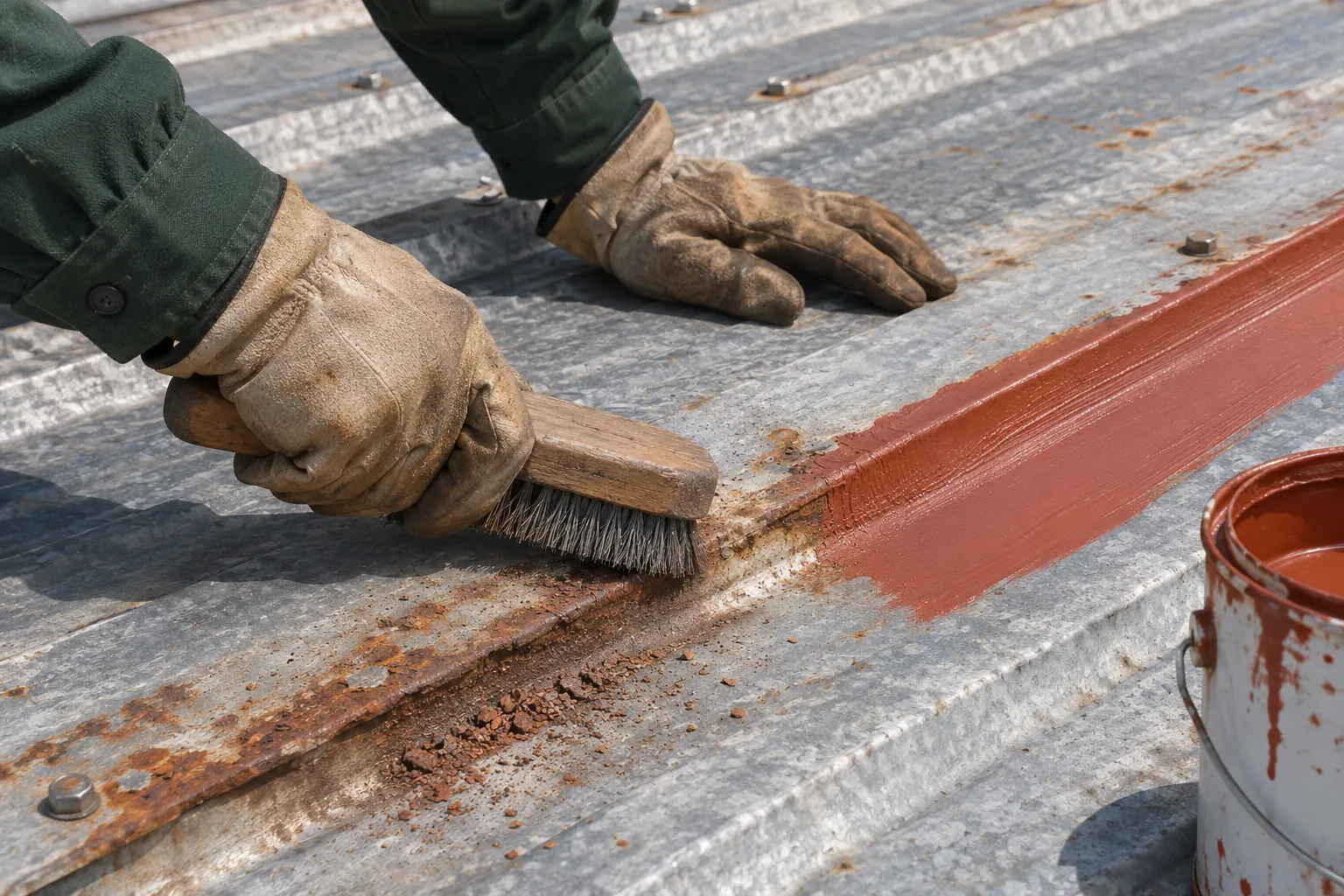
Washing and spot priming bring the panels back to a clean, bondable surface for the coat.
Start WithClean, prime, and coat
As a Philadelphia commercial metal roof coating contractor, we treat rust, replace loose screws, seal laps, and coat exposed-fastener and standing seam roofs on working buildings.
Philadelphia commercial metal roof coating works on steel that still has strength. These four situations show where a roof stands.
Washing and spot priming bring the panels back to a clean, bondable surface for the coat.
Cracked washers let water in at every fastener, and a row of new screws fixes the source.
Swapping those sheets for matching panels lets the rest of the roof take a full coating.
Loose purlins or failed clips mean the structure needs attention before any surface work.
Older ribbed roofs across the city fail in predictable places. We check each zone before writing the repair list.
Every screw on these roofs is a potential leak. Each one gets checked for grip, and stripped holes take an oversized screw with a fresh washer before coating. Missing screws get filled too.
Overlaps trap water and grow rust from the inside out. Lifted laps are stitched back down and sealed with a reinforced base layer. Fabric goes in wherever the lap moves.
Foam closures at ridges and eaves shrink and let wind-driven rain in. Missing closures are replaced so the coating has a tight edge to stop at. Ridge caps get new sealant at their joints.
Translucent panels and unit curbs interrupt the ribs. Their flashing gets new sealant and fabric before the field coat ties into them. Skylight frames are checked for cracks.
Water runs to the eave and sits at the end laps longest, so rust shows there first. Those laps often need the most cleaning and priming. Primer goes on the day the rust is cleaned.
Different metal roofs take different coatings. These four cover most commercial panels we see in the city.
Sloped exposed-fastener roofs that drain well take a bright acrylic system over rust primer and sealed laps.
Shallow pitches with slow runoff near the eave suit silicone, which handles water lingering after storms.
Roofs with widespread rust get a fuller restoration: panel swaps, rust-inhibiting primer across the field, then two coats.
Plan on about $2.50 to $4.00 per square foot of roof, moved up or down by rust, screws, laps, access, and coat count.
Coating a ribbed metal roof keeps the panels in place. Here is how that compares with tearing the roof off.
| What Changes | Coating The Roof | Replacing The Roof |
|---|---|---|
| Planning cost | About $2.50 to $4.00 per square foot | About $5 to $8 per square foot |
| Screws | Loose ones upsized; the rest covered | All new with the new panels |
| Rust | Brushed, primed, and sealed in | Removed with the old sheets |
| Warehouse floor | Work stays on the roof surface | Openings over stock during tear-off |
| Insulation | Wet sections replaced, dry stays | Usually replaced throughout |
| Permit review | Scope lists panel swaps apart from coating | Full replacement scope for review |
Snowmelt leaks at the laps and eaves are easier to fix before the spring storms. Get a ballpark range and book a roof walk.
Metal roofs need more prep than most systems. These steps put most of the effort into the panels before any topcoat.
Fastener rows, laps, closures, and curbs are checked panel by panel. We note sheets that sound hollow or flex, and look underneath for rust coming through from inside.
Rust gets wire-brushed or ground to firm steel and primed with a rust-inhibiting primer before the shift ends, before moisture can form new rust.
Backed-out or stripped screws come out and oversized screws with new washers go in, so each penetration is tight before it is coated.
Side laps, end laps, and curb edges take a base coat with polyester fabric pressed in, which lets the joints move without cracking.
Two passes cover the field at the thickness in the scope, checked with a gauge, and the finished roof is walked with you.
Some buildings mix roof types. These systems cover the rest.
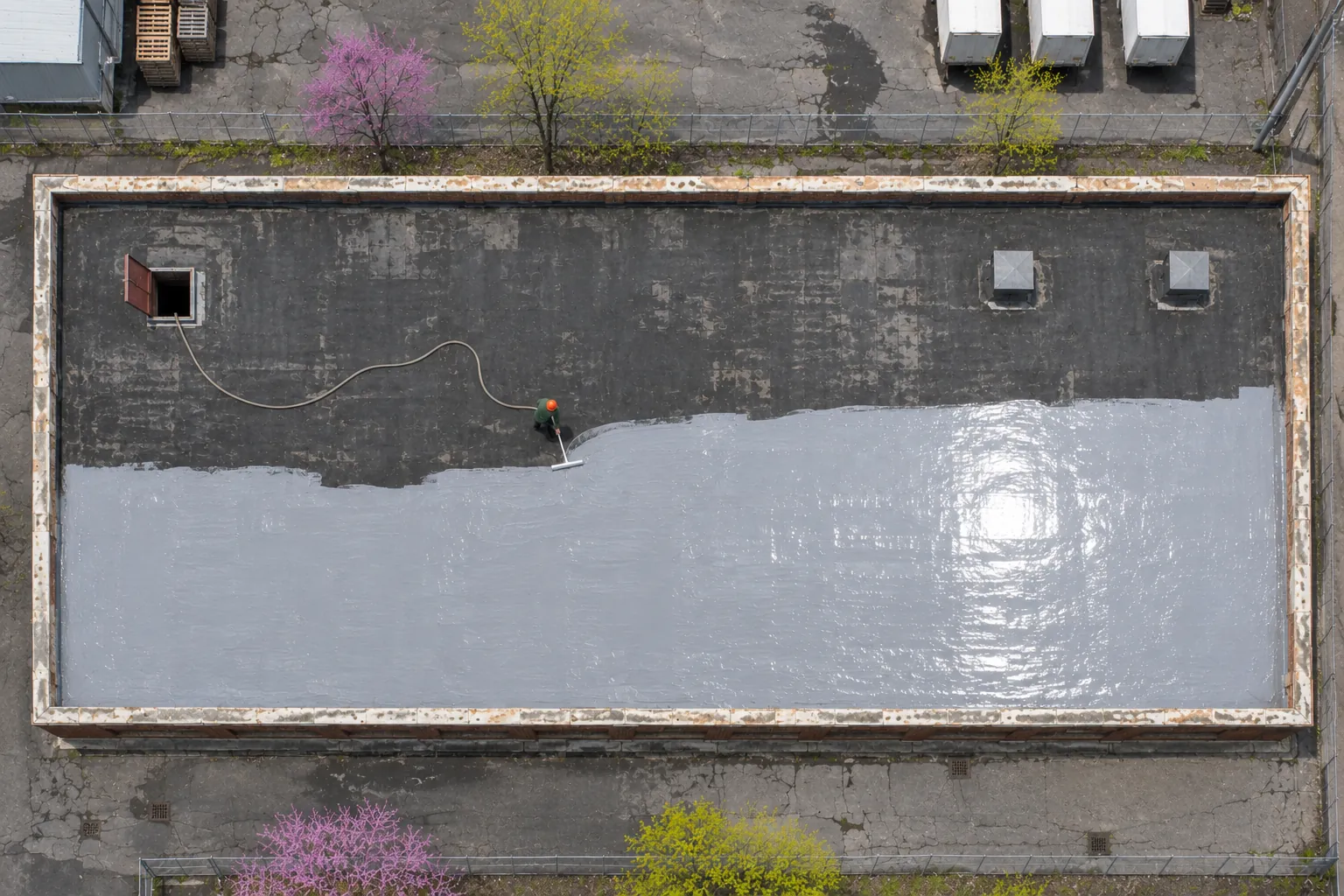
Low-slope sections that hold water after storms, especially flat roofs over offices, take silicone.
Silicone Roof Coating in Philadelphia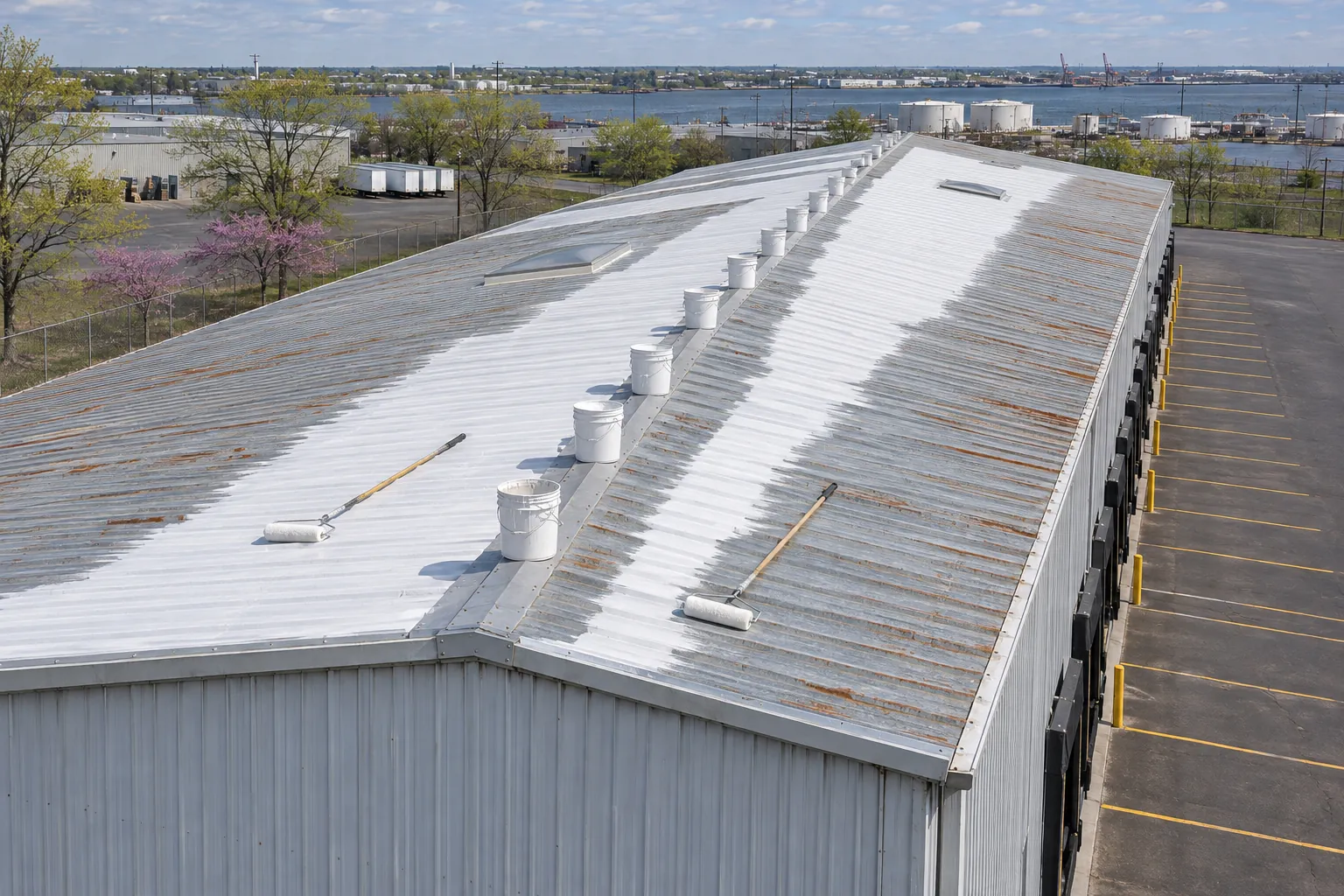
Sloped panels with good drainage and mild application weather can take this lighter option.
Acrylic Roof Coating in Philadelphia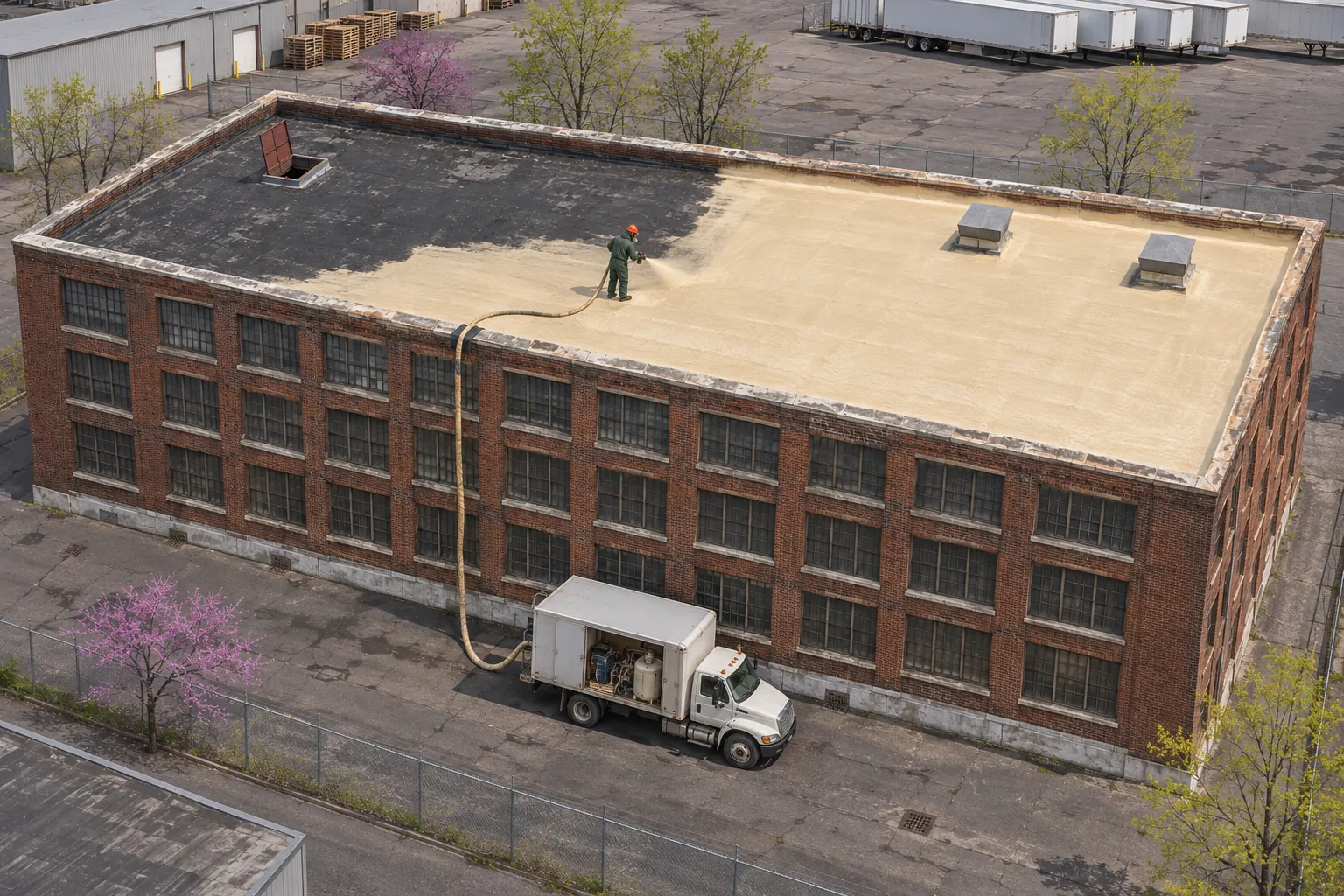
Insulation gets added over dry roofs while screws disappear under a continuous layer.
Spray Foam Roofing in Philadelphia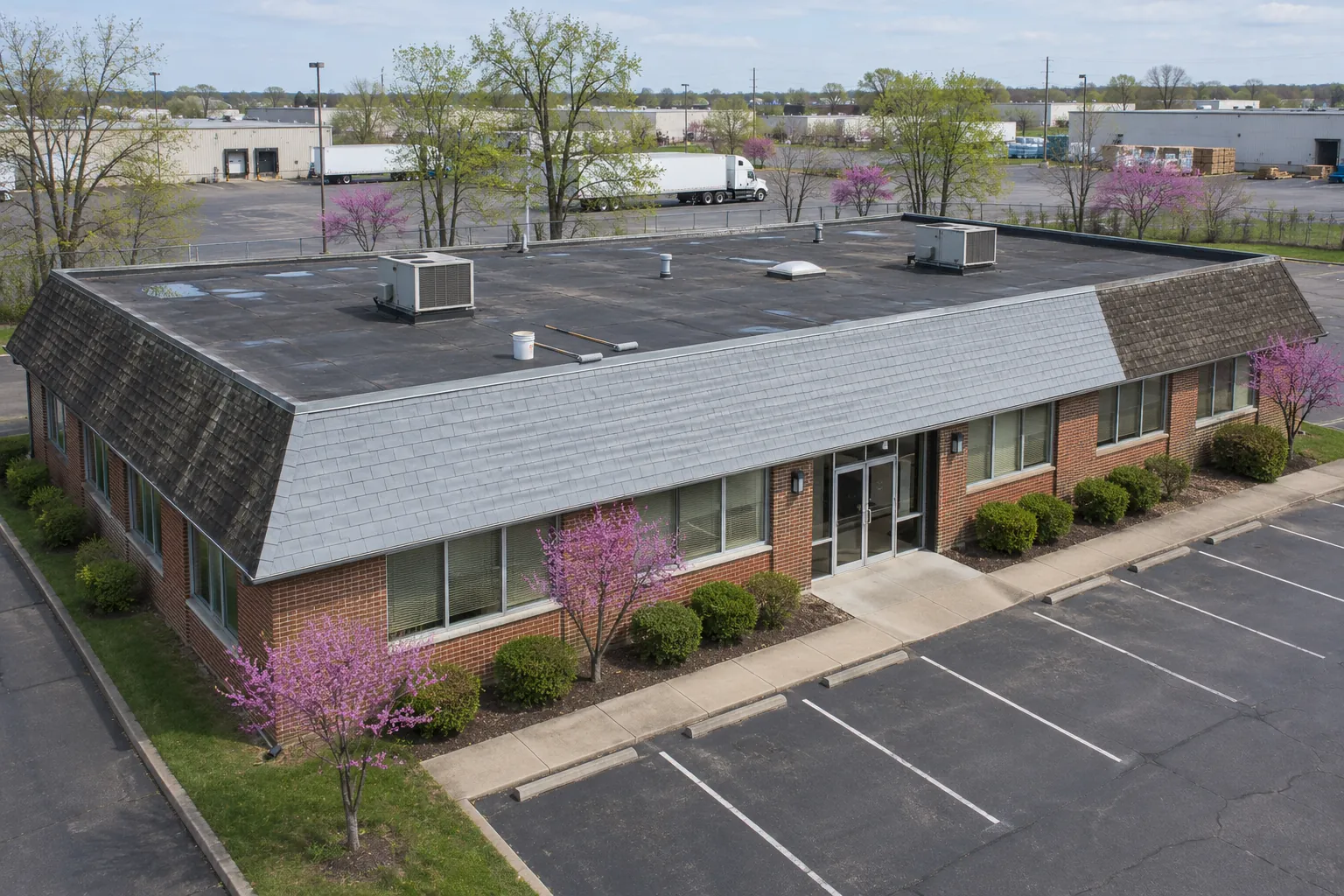
Mansard faces and shingled additions qualify when the shingles are still firm and flat.
Shingle Roof Coating in PhiladelphiaOnly the ones that fail a check. We test grip and washer condition along several rows. Screws that spin, back out, or have cracked washers come out and an oversized screw goes in, while tight screws get a dab of sealant and are coated over.
Restoration covers the repairs plus the coating: replacing rusted-through sheets, re-fastening loose laps, new closures, rust primer, seam reinforcement, and the topcoat. The scope lists which panels stay, which get replaced, and how the surface is checked before coating.
They can, with attention to the clips and seams. Standing seam roofs move more with temperature, so we check that seams are closed and clips are holding, then use a coating flexible enough to follow that movement.
A white or light coating reflects more sunlight than weathered metal, which lowers roof surface heat. How much the space below feels it comes down to insulation, ventilation, and how the building is used.
Condensation forms from moist indoor air meeting cold steel, which an exterior coating leaves unchanged. We compare drip spots with the weather and building use, and point you to insulation or ventilation fixes when that is the cause.
During application we take wet-film gauge readings across each section and compare them with the thickness in the scope. Low readings get another pass before that section is signed off.
Gutters and their seams are cleaned, resealed, and coated where they are attached and draining. Gutters rusted through or pulling off the fascia get replaced as part of the repair list.
Send the roof size and what you see at the screws and laps. We will walk it and price the repairs and coating.