
If Your Roof
Holds shallow puddles for a day after rain
Silicone tolerates water that lingers, as long as the low spot comes from slope and not a clogged outlet.
Start WithSilicone coating
As a Philadelphia silicone roof coating contractor, we coat low-slope and flat commercial roofs after drains, wet insulation, and open seams are fixed.
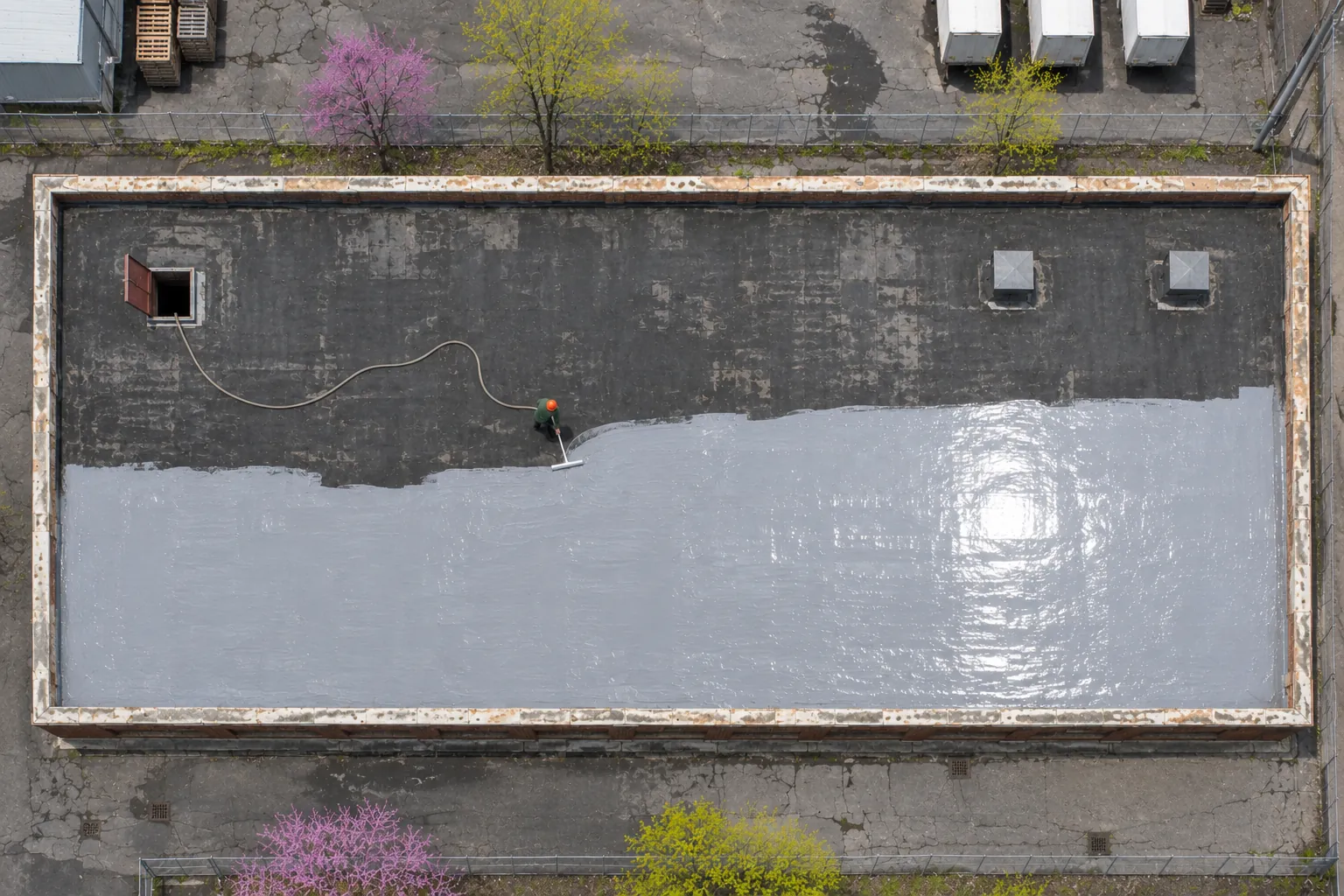
Philadelphia silicone roof coating fits low roofs with slow runoff, once the roof underneath is dry and drains are working.
Silicone tolerates water that lingers, as long as the low spot comes from slope and not a clogged outlet.
Test patches tell us whether silicone grips the old film or whether a primer is needed.
Asphalt sheets can stain light coatings, so a bleed-blocking primer goes on first.
Wet insulation across the field means sections of roof need to come off before coating.
Silicone covers the field, but leaks start at the edges and openings. We check these zones before ordering material.
Coping caps and base flashing on brick parapets let water behind the membrane. Loose coping gets refastened and the base flashing sealed before coating. Loose coping joints get resealed too.
Open seams on older single-ply or cap sheets are repaired first, because silicone bridges small gaps but needs a firmly attached edge on each side. Seam edges are cleaned to the original sheet.
Debris, crushed strainers, and drains set higher than the roof around them cause most ponding. We clear and reset them before deciding on silicone. Strainers are replaced when crushed.
Units and their curbs collect foot traffic from service techs. Walk pads around them keep silicone from wearing through where people stand. Pads go where technicians kneel.
Wet board under the membrane stays wet under silicone. Core cuts or a moisture survey find it so those sections get replaced. Moisture surveys map the wet board.
Silicone is one of several low-slope options. These four cover the choices we lay out for flat roofs in the city.
A single thick silicone layer handles lingering water and suits roofs with a few low areas near drains.
Most jobs use one or two passes to reach the thickness the product sheet requires, which matters more than the pass count.
About $2.50 to $4.00 per square foot of roof covers the coating range; seam repair, primers, and wet sections change the total.
Sections that shed water within hours can take acrylic, which recoats easily and costs less per gallon.
For a flat roof near the end of its first life, silicone and replacement are the two usual choices. Here is how they differ.
| What Changes | Coating The Roof | Replacing The Roof |
|---|---|---|
| Planning cost | About $2.50 to $4.00 per square foot | About $5 to $8 per square foot |
| Existing membrane | Repaired and left in place | Removed down to the deck |
| Water near drains | Silicone handles it after drain repair | Tapered insulation can correct slope |
| Later upkeep | Recoated with silicone only | New membrane maintenance plan |
| Building below | Offices stay closed in | Deck exposed during tear-off |
| Walk paths | Pads added at service routes | Pads added at service routes |
Tell us where water sits after rain and how long it stays. We will check drains first and price the coating from there.
Silicone is forgiving with water but unforgiving with dirt. Most of these steps get the surface clean and dry.
We walk the field, seams, parapets, and drains, mark soft spots, and take core samples where the insulation might be wet.
Saturated insulation and membrane are cut out and rebuilt flush with the surrounding roof so the coating has a dry, even base.
Pressure washing removes dirt, loose granules, and chalk. Silicone bonds poorly to dust, so the roof dries fully before the next step.
Asphalt surfaces get a bleed-blocking primer, and old coatings get whatever primer the adhesion test called for.
Seams and details get a first layer, then the field is coated to full thickness and checked with a gauge across the roof.
If silicone is a poor match for part of your roof, one of these covers it.
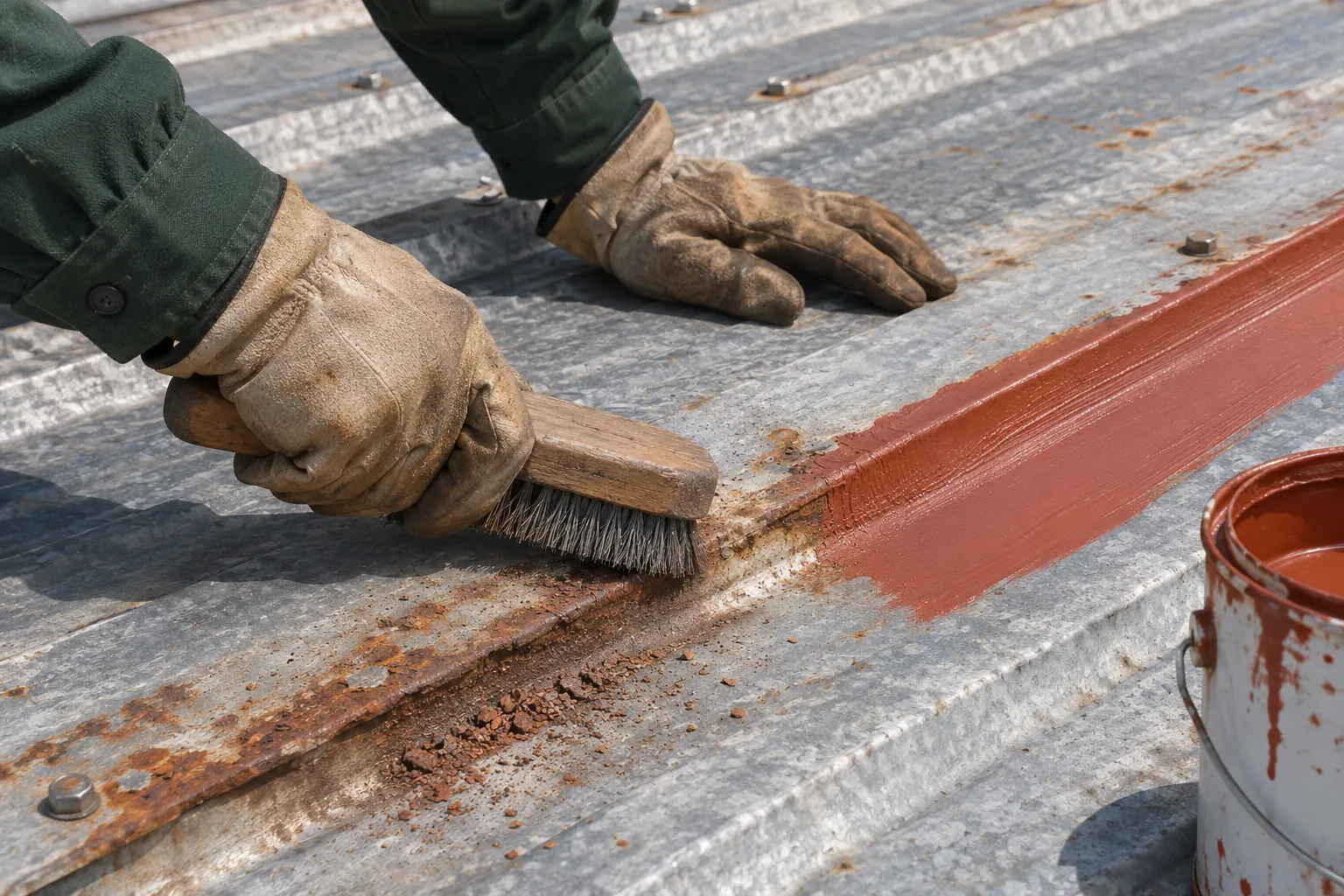
Ribbed and standing seam panels with rust and loose screws need this system.
Commercial Metal Roof Coating in Philadelphia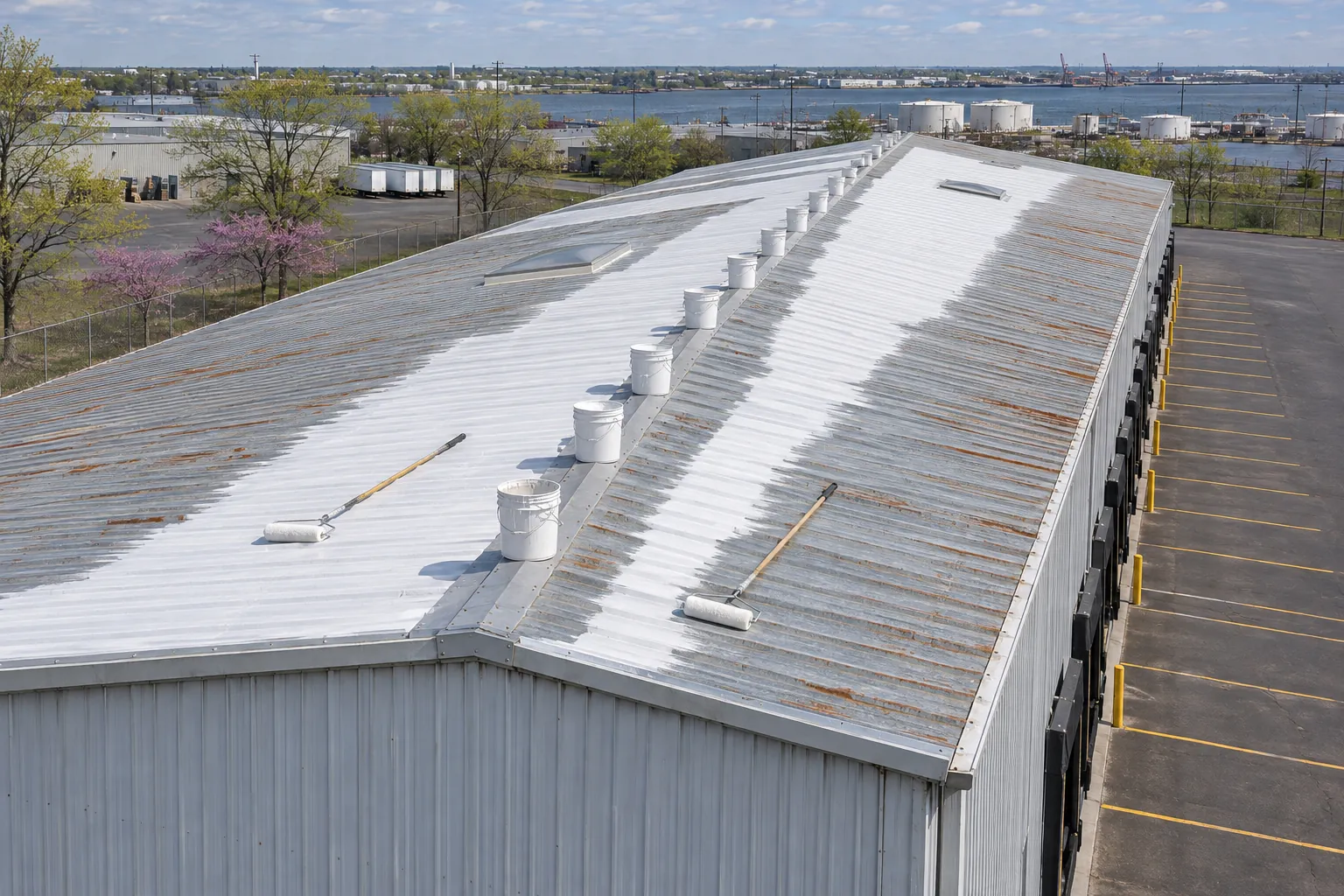
Quick-draining sloped sections recoat easily with acrylic.
Acrylic Roof Coating in Philadelphia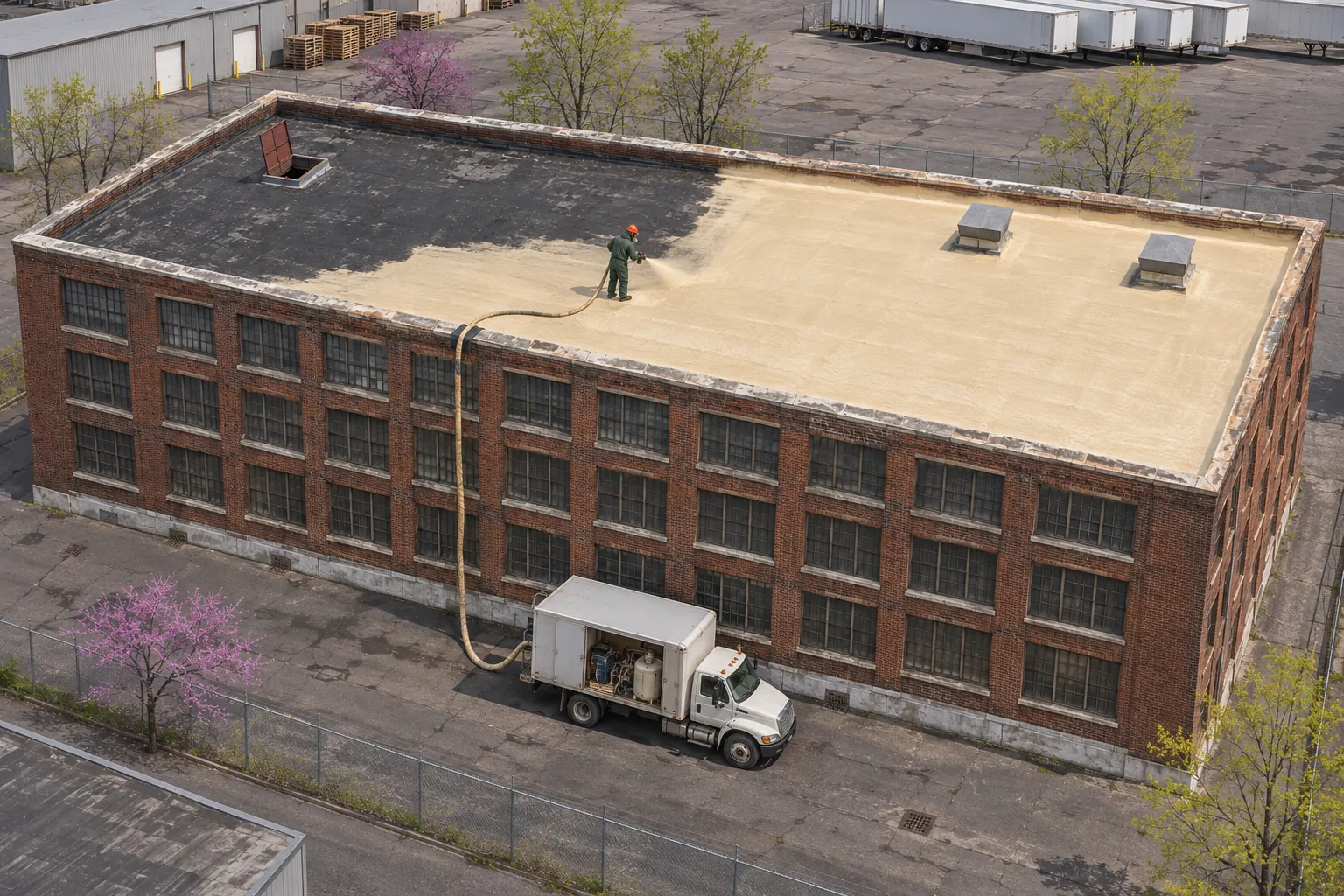
Uneven flat roofs gain insulation and better drainage from foam.
Spray Foam Roofing in Philadelphia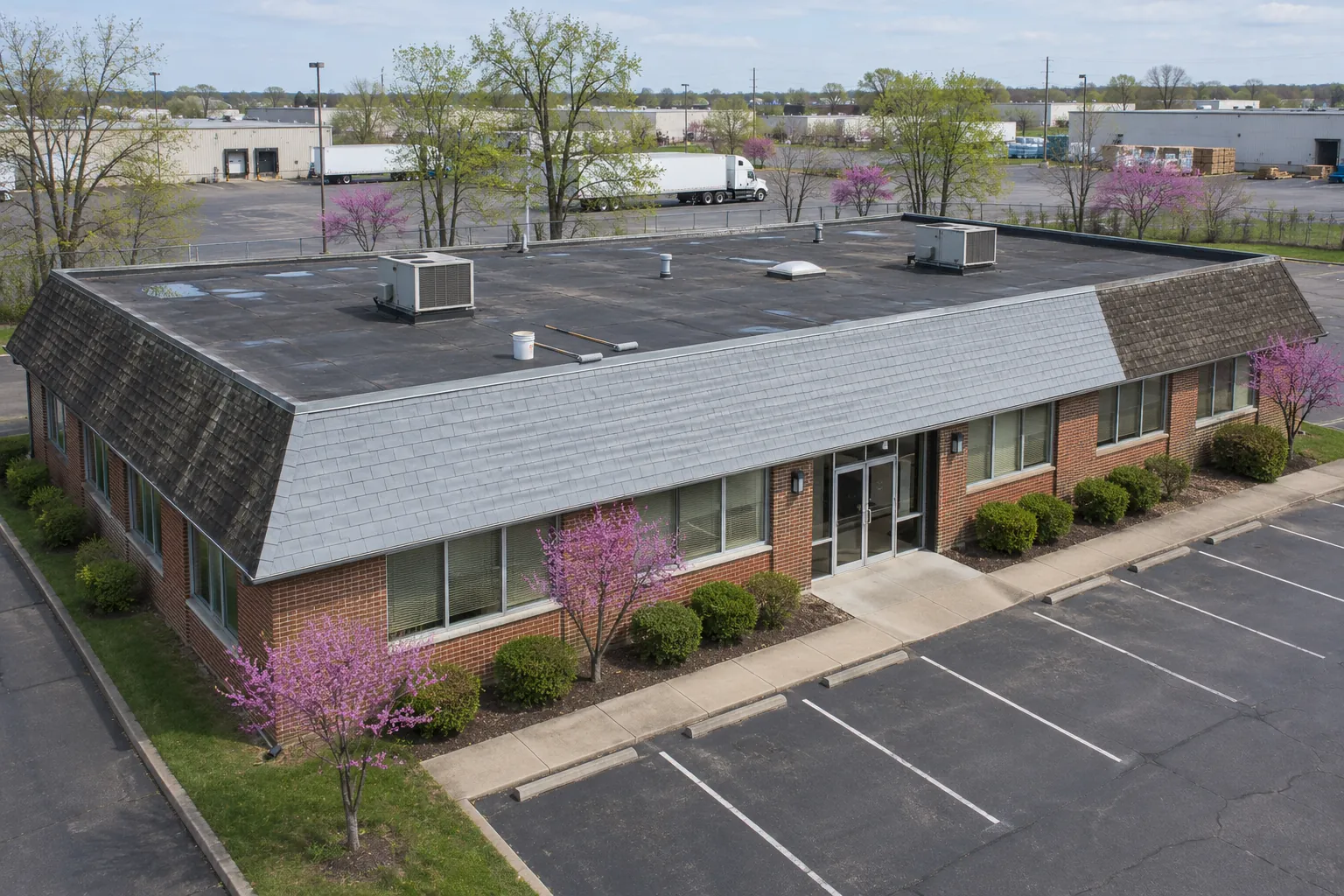
Shingled mansards above the flat roof get their own approval check.
Shingle Roof Coating in PhiladelphiaSilicone collects dirt, gets slippery when wet, and only silicone sticks to it later, so future repairs and recoats stay silicone. Around frequently serviced units, we add walk pads so technicians are not wearing through the film or slipping on it.
That rests on the roof under it, the thickness installed, and the traffic it sees. Aging silicone shows thin spots, lifted edges at repairs, or worn paths near units. We separate surface dirt from real film damage during yearly checks.
Never on a dirty roof. Silicone holds onto dust instead of the roof, so we wash, let the surface dry fully, and test adhesion before coating.
Tolerating ponding differs from fixing it. Blocked drains, crushed strainers, and sagging deck still need repair, and some low spots need tapered crickets to move water off the roof.
Grease and oily exhaust residue keep any coating from bonding. We clean those areas with a degreaser, test them, and sometimes add a sacrificial pad or shield where exhaust keeps landing.
Low-slope metal roofs take silicone well after rust prep, fastener work, and seam reinforcement. Steeper metal that drains quickly often suits acrylic, which costs less and recoats easily.
Base flashing and coping are repaired first, then the silicone runs up the wall to a clean termination. Loose mortar or a cracked coping joint gets fixed before coating starts.
Tell us about the ponding and the roof surface. We will check the drains and write the silicone scope.