
Dirty Surface
Coating rolled over dirt or chalk lets go in sheets. Pressure washing and drying fix that on the next coat. Chalky residue shows on a fingertip.
As a Lansdowne metal roof coating contractor, we investigate why an old coating is peeling before adding anything, then strip, prime, and recoat.
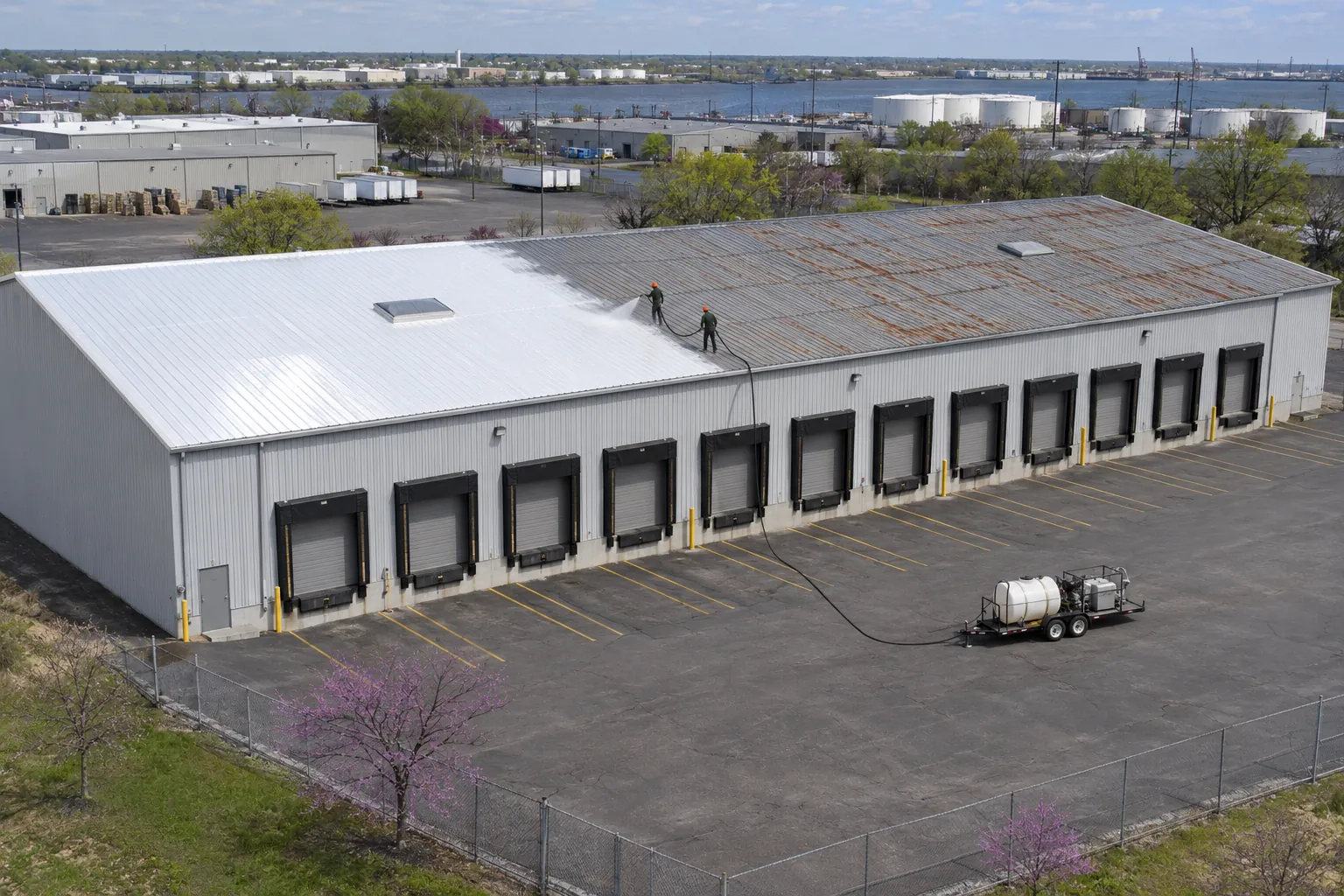
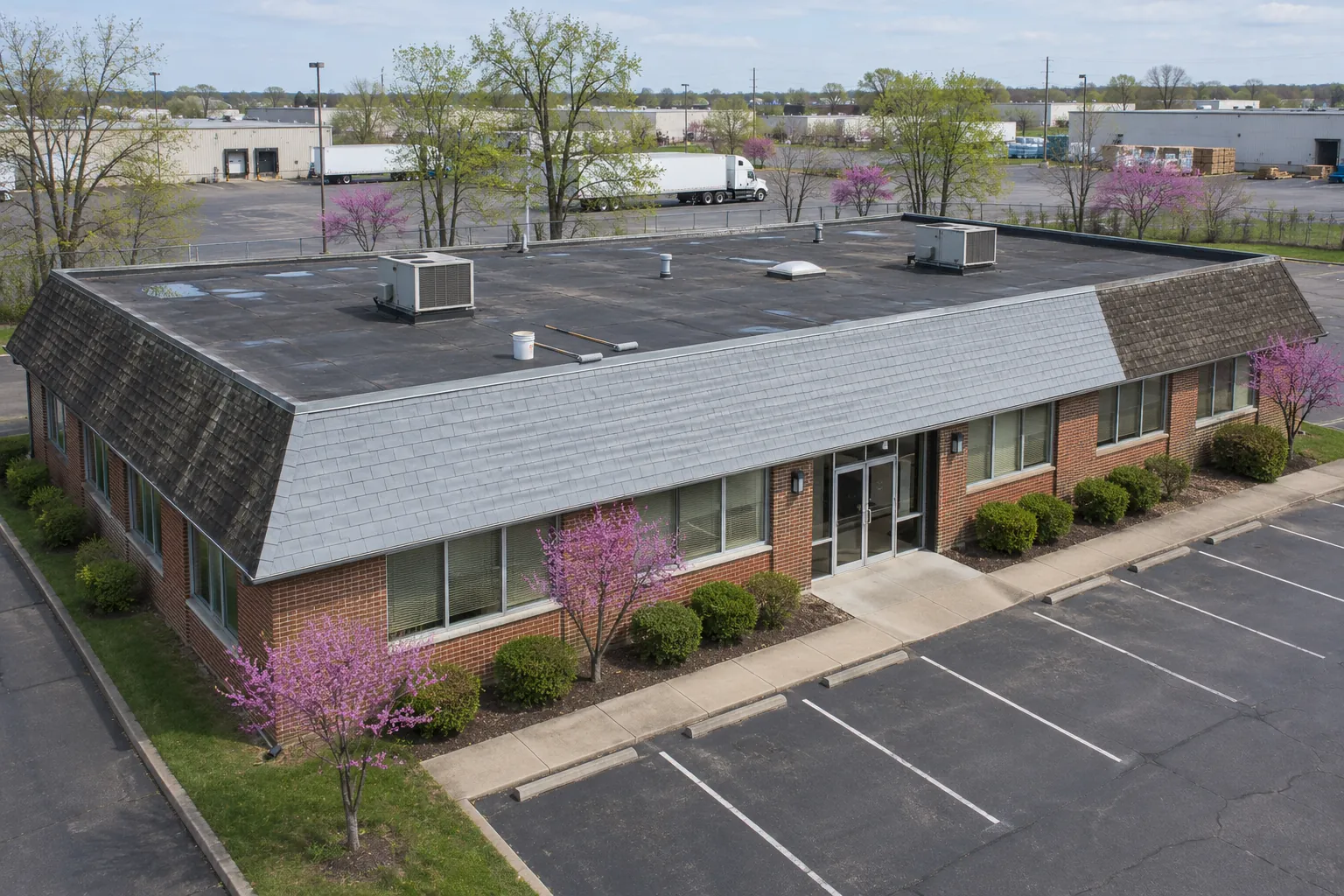
Lansdowne metal roof coating calls often start with a roof that was coated before and is now peeling. We check whether the failure sits only at old patches or runs across whole panels. Putting more material over a failing bond carries the weakness forward, so the tests decide whether to strip, prime, or recoat.
Peeling often traces back to a single missed step from the first coating: a dirty surface, a skipped primer, or the wrong product on top of another. Finding that step is how the next coat lasts.
Peeling follows a cause. These are the five we find most often on recoat jobs.
Coating rolled over dirt or chalk lets go in sheets. Pressure washing and drying fix that on the next coat. Chalky residue shows on a fingertip.
Acrylic over silicone and some coatings over oily patches never bond. Product mismatch shows up as wide, clean peels. Clean peels with no residue show a mismatch.
Rust growing under the old coating lifts it from below. Blisters with orange beneath point to this. Rust stains under blisters confirm it.
Unreinforced laps crack the coating and peel it back as the panels move. Fabric at those joints stops the cracking. Cracks along laps line up with the seams.
Thin application, below what the product calls for, wears through and curls at the edges within a few years. Gauge readings on old film show the thickness.
A peeling roof can be recoated or replaced. The adhesion tests decide which path makes sense.
| What Changes | Coating The Roof | Replacing The Roof |
|---|---|---|
| Planning cost | About $2.50 to $4.00 per square foot plus stripping | About $5 to $8 per square foot |
| Old coating | Stripped or primed per test | Removed with the old panels |
| Cause of peeling | Found and corrected | Removed with the old roof |
| Metal condition | Treated where exposed | All new |
| Recoat later | Same-family coating | New finish maintenance |
| Testing | Pull tests and test patches documented | No testing of old coating needed |
After the tests, peeling roofs fall into one of these four groups.
When peeling is confined to patches or laps, those areas are stripped and primed, then the whole roof gets a fresh coat.
Wide failure across the panels means the old coating comes off entirely before any new system goes on.
Storefronts and offices with a coating from years ago often need a wash, a test, and a matching recoat.
The planning range is about $2.50 to $4.00 per square foot of roof, with stripping old coating adding prep time.
Blisters with rust beneath are cut open, cleaned to firm steel, primed, and patched before the new coat.
Every recoat starts with a full pressure wash and a dry surface, since dirt and chalk caused many of the failures we see.
Peeling has a cause, and recoating without finding it repeats the failure. Get a ballpark range and a roof walk.
Recoat jobs add a testing stage at the start. The rest follows our usual order.
Peel areas are mapped and pull tests made on the coating that remains, along with laps, screws, and rust. Photos record every peel area.
Test patches with the new system show whether to strip, prime, or recoat directly over the old film. Results show up within a few days.
Failed coating comes off by scraping or pressure washing, and exposed rust is primed. Loose flakes are bagged and removed.
Laps and screws get fabric and base coat so movement no longer cracks the coating. Screws with lifted coating get resealed.
The new coating goes on at its listed thickness, checked with a gauge across the roof. Readings are shared with you at sign-off.
We hand over the adhesion test results and thickness readings, walk the roof with you, and point out any laps to watch during yearly checks.
Outside Lansdowne, these are the other communities where we coat roofs.
Outside these towns? Call us or send us a message.
City warehouses with long screw rows and rusted laps.
Coating staged around trucks and dock doors.
Old seam patches tested or stripped.
Only after finding why the old coating let go. We check whether peeling sits at old patches or runs across the panels, because more material over a failing bond carries the same weakness forward.
We serve Lansdowne directly. Call with the roof size and a description of the peeling, and we will test the old coating on a roof walk.
Not over the peeling parts. Loose acrylic comes off first; firmly attached areas are tested with silicone patches before we commit.
Stripping adds prep days and labor on top of the coating range of about $2.50 to $4.00 per square foot of roof. Wide peeling costs more to remove than spot failures.
It should hold when the surface is clean, the products are compatible, and the thickness is right. We document the adhesion tests and thickness so you can see each one was done.
The most common causes are dirt or chalk under the coating, a missing primer, incompatible products, or rust underneath. The pull tests and peel pattern tell us which one happened.
Yes. Pressure washing and hand scraping take off loose coating without cutting into the steel. Any rust uncovered is treated and primed before recoating.
Sometimes, and bare metal under peeling coating starts to rust. Leaks show up once rust reaches the laps and screws, so recoating sooner keeps repairs small.
Describe the peeling and the roof size, and we will test the old coating before anything new goes on.